The rapid expansion of artificial intelligence is beginning to create an unexpected challenge for Africa’s digital-inclusion ambitions: the smartphones needed to access AI-powered services could become more expensive.
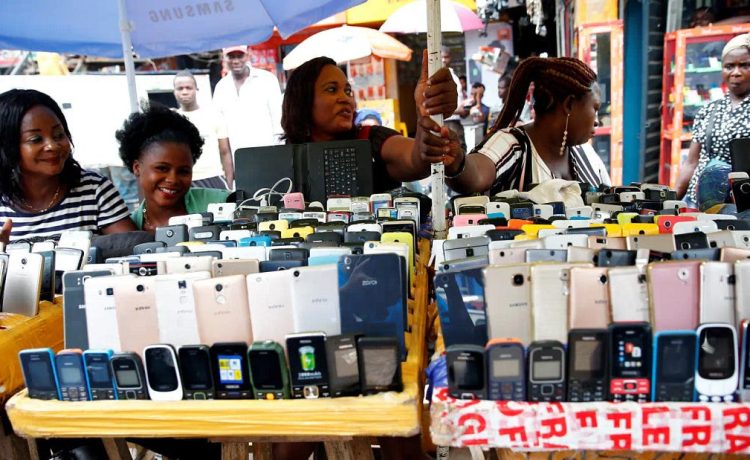
Africa’s smartphone market is heavily dependent on affordable devices. In 2025, smartphones priced below $200 accounted for about 81% of shipments across Africa, demonstrating how important budget devices are to connecting consumers to the internet and digital services.
However, rising demand for components needed by AI systems is putting pressure on the smartphone supply chain. Manufacturers are facing higher costs for memory and other components as the global technology industry competes for limited semiconductor resources.
According to a recent TechCabal report, shipments of smartphones priced below $100 could decline by 34% in 2026, while Africa’s overall smartphone market could contract by approximately 26%.
The development creates a significant dilemma for African countries.
AI is increasingly being promoted as an important tool for economic inclusion. It has the potential to improve education, healthcare, agriculture, financial services and access to information. Governments and businesses across the continent are also exploring AI as a means of increasing productivity and creating new economic opportunities.
But those benefits depend on people having access to suitable devices.
For millions of Africans, particularly low-income consumers, smartphones priced below $100 or $200 represent the most realistic entry point into the digital economy. If rising component costs push manufacturers to increase prices, some consumers could delay replacing older phones or remain excluded from newer digital services.
The pressure is not limited to Africa. The global AI boom is increasing demand for memory chips, processors and other components used in both AI infrastructure and consumer electronics. Recent industry commentary has also linked growing AI investment to higher prices for smartphones and laptops.
For African consumers, however, the consequences could be particularly significant because affordability remains one of the continent’s biggest barriers to digital access.
The situation also raises questions about the future direction of Africa’s digital transformation. If AI applications require increasingly powerful hardware, policymakers and technology companies will need to consider how to make AI accessible beyond premium smartphones.
This could encourage greater investment in locally appropriate AI solutions, lightweight applications, cloud-based services and affordable devices that can deliver useful AI capabilities without requiring expensive hardware.
Manufacturers may also need to develop new strategies for the African market, including longer-lasting devices, lower-cost components and financing options that make smartphones more accessible to consumers.
The central irony is becoming increasingly clear: AI is being presented as a technology capable of expanding economic opportunity and digital inclusion, yet the hardware required to access that opportunity may be becoming less affordable.
For Africa, therefore, the AI race is not simply about developing sophisticated algorithms or attracting AI investment. It is also about ensuring that ordinary citizens can afford the devices and connectivity needed to participate in the emerging digital economy.