The killing of a Christian cleric abducted while travelling with his wife and other passengers along the Barkin Ladi-Bokkos road in Plateau State has renewed concerns over persistent insecurity and attacks on religious leaders and rural communities across Nigeria’s Middle Belt.
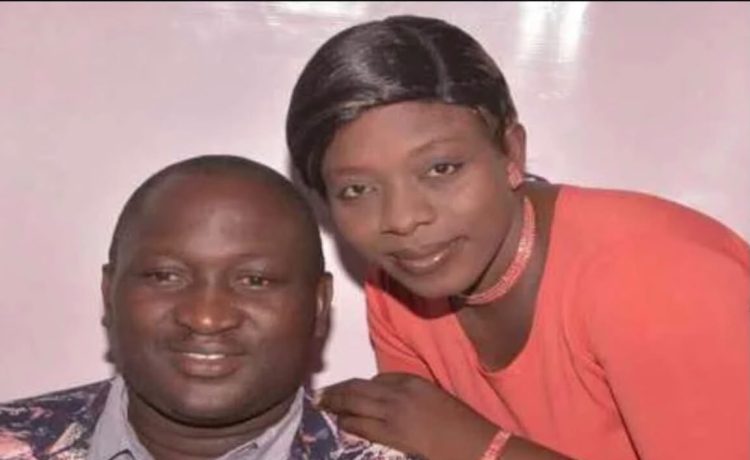
Pastor Hills Emmanuel, a Ghanaian-Nigerian cleric and founder of the Wonderful Grace of God Evangelical Ministry in Bokkos, was travelling from Jos to Bokkos on the night of Friday, August 28, when armed men intercepted the commercial vehicle carrying him, his wife and other passengers.
Another cleric, Pastor Gabriel Joseph Dipak of the Christ Apostolic Church, was also seized during the attack.
Contemporary reports said the gunmen stopped a minibus carrying nine passengers, robbed occupants of money, mobile phones and other belongings, and then took the two pastors into the bush. Emmanuel’s body was discovered the following morning near the location of the abduction.
Widow Says Attackers Threatened Husband Would Not Return Alive
Emmanuel’s wife, Scholastica, who witnessed the abduction, subsequently gave a harrowing account of what happened.
She said the attackers began searching the passengers after stopping their vehicle and singled out her husband and Dipak after identifying them as Christian clerics.
Scholastica said she pleaded with the gunmen to release the two men after the passengers had been robbed, but the attackers refused.
As her husband was being taken away, she said one of the assailants told her that she would not see him alive again.
She identified the attackers as Fulani based on the language she said she heard them speaking. That identification is the account of a witness and should be distinguished from an official determination by security authorities.
Her husband’s body was discovered the next morning.
Reports at the time confirmed that Emmanuel had been killed, although some of the more graphic details circulating subsequently about the precise manner of his death come from later witness and advocacy accounts rather than the initial official reporting.
Second Pastor Survives Abduction
Initial reports following the attack said Dipak remained in captivity and that his abductors had contacted his family.
A later account published by TruthNigeria reported that Dipak was eventually released shortly before midnight the following day after a ransom was paid. That report also attributed to Dipak a more detailed account of Emmanuel’s killing while the two men were in captivity.
The distinction in timing is important because early reports understandably described Dipak as missing, while later reporting indicated that he survived.
Emmanuel left behind his wife and five children.
He had previously served with Dunamis Church before establishing the Wonderful Grace of God Evangelical Ministry in Bokkos. His widow also described him as a respected figure within the local Christian community.
TruthNigeria reported that Emmanuel additionally served as treasurer of the Bokkos chapter of the Pentecostal Fellowship of Nigeria, PFN.
Other Plateau Communities Attacked Same Night
Emmanuel’s killing did not occur in isolation that night.
Reports said several other attacks took place in communities across Plateau State between Friday night and Saturday.
A woman was reportedly killed in Fang village in Riyom Local Government Area, while two other people were killed in Radura village in Barkin Ladi.
Another person was injured during an attack on Chakfem village in Mangu Local Government Area.
The Guardian reported that at least five people, including Emmanuel, were killed in the violence across the affected communities.
Conflict reporter Masara Kim described the incidents as coordinated and alleged that Christian communities were deliberately targeted. Other reporting at the time noted that this specific claim had not been independently verified and that authorities had yet to provide a full account linking all the incidents.
Plateau’s Long-Running Security Crisis
The killings once again highlight the complex security crisis affecting Plateau and other parts of Nigeria’s Middle Belt.
Communities across Plateau have endured repeated cycles of village attacks, kidnappings, reprisals and displacement.
The causes of the violence are deeply contested and frequently overlap.
Competition over land and grazing resources, criminal banditry, ethnic tensions, local political disputes and religious identity have all featured in explanations of the crisis. At the same time, Christian organisations and affected communities have repeatedly alleged that some attacks display deliberate patterns of religious targeting.
In the case of Emmanuel’s killing, his widow’s testimony that the assailants deliberately removed two pastors from the vehicle while allowing other passengers to leave after robbing them will inevitably intensify those concerns.
But identifying attackers as Fulani should not be treated as implicating the wider Fulani ethnic population. Fulani communities comprise millions of people across Nigeria and West Africa, and responsibility for individual attacks must remain with the armed individuals and groups involved.
Christian Leaders Allege Clergy Are Being Targeted
Local Christian leaders argue that Emmanuel’s death belongs to a broader pattern.
Bishop Ayuba Matawal, a former Christian Association of Nigeria chairman in Bokkos, told TruthNigeria that at least 24 Christian ministers had been killed in the area since 2013, while another 35 had been kidnapped, tortured and eventually released following ransom payments.
Matawal alleged that religious leaders and church buildings are frequently targeted because of their influence within Christian communities. Those figures and the attribution of responsibility are claims from local Christian leadership rather than independently established official statistics.
The wider question of religious persecution in Nigeria remains politically and internationally contentious.
Some Christian advocacy organisations characterise significant portions of the Middle Belt violence as targeted anti-Christian persecution, while Nigerian authorities have often emphasised a broader mixture of terrorism, banditry, communal conflict and competition over resources.
Those explanations are not necessarily mutually exclusive. Different attacks can have different perpetrators and motives, and religious, ethnic, economic and criminal factors can overlap.
Killing Raises Questions Over Security on Key Road
Another troubling aspect of the incident is where it happened.
Witness accounts cited in several reports alleged that the roadblock used by the attackers was located relatively close to military checkpoints along the Barkin Ladi-Bokkos corridor.
That raises questions about how armed men could establish a roadblock, search passengers and abduct two people on a route where security forces were reportedly operating.
For residents, the problem extends beyond identifying the attackers.
The more immediate question is whether people can travel between Plateau communities without facing kidnapping or death.
A Widow, Five Children and an Unanswered Security Question
Behind the statistics is a family.
Scholastica travelled towards Bokkos on August 28 expecting to return home with her husband.
Instead, she returned without him and learned the following morning that the threat allegedly made by one of their abductors had been carried out.
Emmanuel’s death has therefore become another symbol of Plateau’s persistent insecurity — but it should also produce questions that go beyond religious and ethnic labels.
Who carried out the attack? Were the same gunmen responsible for the other killings that night? Why were two clerics singled out? How did the attackers operate near reported security positions? And what measures have authorities taken to prevent another ambush along the same corridor?
Answering those questions through investigation and prosecution would do more than establish responsibility for one pastor’s death.
It would demonstrate whether the Nigerian state can protect communities caught in one of the country’s longest-running and most complicated security crises.