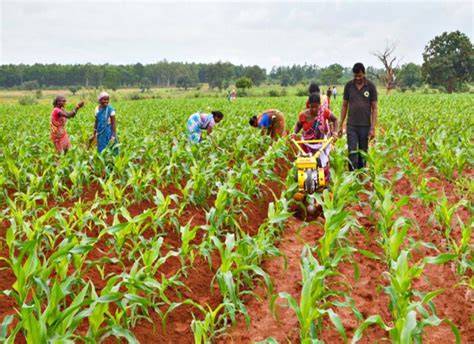
The Bank of Agriculture (BoA) has unveiled a N200 billion Guaranteed Minimum Price programme aimed at supporting farmers and helping to stabilise food prices across Nigeria.
The initiative is expected to target more than 500,000 farmers and facilitate the production and marketing of about 400,000 metric tonnes of grains.
According to the bank, the programme is also designed to support food supplies reaching an estimated 11.25 million households.
The initiative will provide farmers with a price floor for selected agricultural commodities, giving them greater protection against sharp price declines during periods of high production.
Focus on major food crops
The programme will cover key crops including rice, maize, sorghum and soybeans.
Under the scheme, the BoA intends to work across the agricultural value chain, including aggregation, storage and marketing.
The approach is aimed at reducing the pressure on farmers to sell their produce immediately after harvest, when prices can fall because of increased supply.
By providing a guaranteed minimum price, the bank hopes farmers will have more confidence to produce at scale while also helping to create a more predictable supply of food commodities.
Farmers affected by low prices
The initiative comes after concerns that some farmers were forced to sell their crops below production costs during the 2024/25 agricultural season.
Such situations can discourage farmers from expanding production and may create further challenges for food security and agricultural investment.
BoA Managing Director and Chief Executive Officer, Ayo Sotinrin, said the new scheme was designed to address some of these challenges by providing stronger support for farmers and improving the movement of agricultural produce from farms to markets.
Supporting food security
Beyond helping farmers, the programme is expected to contribute to efforts to improve food availability and moderate price volatility.
The government and financial institutions have increasingly focused on agricultural financing, storage and market access as part of measures to address Nigeria’s food security challenges.
The success of the N200 billion scheme will depend on effective implementation, access to farmers and the ability to ensure that produce is properly aggregated, stored and distributed.