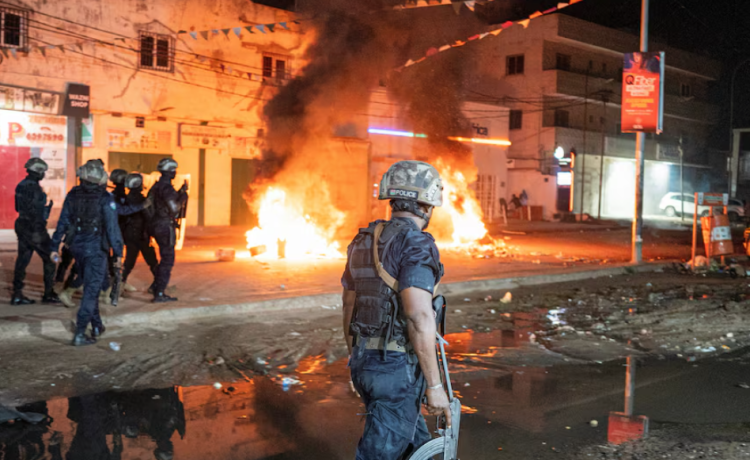
Thousands of frustrated residents in The Gambia have taken to the streets to protest prolonged electricity blackouts, with some outages reportedly lasting as long as 48 hours. The demonstrations took place overnight in several areas around the capital, Banjul, as residents demanded urgent action from the government.
Protesters burned tyres, erected barricades and chanted “Barrow must go!” in and around Banjul. Police used tear gas to disperse some of the crowds, including demonstrators who moved towards the headquarters of the National Water and Electricity Company (NAWEC).
The protests also spread to Farato, where demonstrators gathered near the residence of Vice President Mohammed B.S. Jallow and reportedly destroyed banners belonging to the ruling National People’s Party. The unrest comes just months before the country’s expected December presidential election, in which President Adama Barrow is seeking a third term.
President Barrow responds
President Barrow acknowledged the hardship caused by the power crisis, saying families were dealing with extreme heat, children were studying in darkness and food was being spoiled because of the lack of electricity. He also admitted shortcomings in the government’s planning, power generation and maintenance systems.
Barrow said the government is installing an additional 24-megawatt generation machine at the Brikama Power Station, which is expected to be commissioned by the end of October. He also announced plans for a 50-megawatt solar power plant in Soma.
The president has promised that electricity supply will improve by the end of October 2026 and has established a presidential task force to monitor the crisis and provide regular updates.
NAWEC has previously attributed the shortages to unusually high electricity demand during the hot season, technical problems affecting generating equipment and reduced hydropower availability.
The crisis is now putting significant pressure on the Gambian government, with public anger over electricity reliability increasingly becoming a political issue ahead of the December election.