African indigenous languages are experiencing a renewed wave of interest as young people across the continent and in the diaspora seek stronger connections with their heritage.
Languages that were often pushed aside in favour of English, French and Portuguese during and after colonial rule are increasingly being embraced through social media, online learning, entertainment and cultural businesses. Africa has between 1,500 and 3,000 languages, according to UNESCO.
Young Africans reconnect with their heritage
For many young people living outside their countries of origin, learning an African language has become a way of reconnecting with parents, grandparents and their cultural identity.
One example is Nyashadzashe Machingura, a 15-year-old in Canada who is learning Shona from a teacher in Zimbabwe. She said speaking the language has helped her communicate more deeply with her grandparents and has made her feel more connected to her heritage.
Technology has made this easier. Young people can now learn languages remotely through online classes, social media communities and digital entertainment without necessarily living in the country where the language is spoken.
Online businesses are emerging
The renewed interest is also creating opportunities for entrepreneurs.
In Zimbabwe, Shungu Chidovi left her banking career to concentrate on ZimbOriginal, an online platform that teaches Shona through storytelling, book clubs and language exchanges.
Her students include people living in Zimbabwe, Canada, Australia, South Africa, Ireland and Scotland.
Such businesses demonstrate that African languages can become part of the digital economy rather than remaining limited to homes and traditional settings.
Nigeria’s Yoruba-language show attracts attention
Nigeria is also experiencing this cultural resurgence.
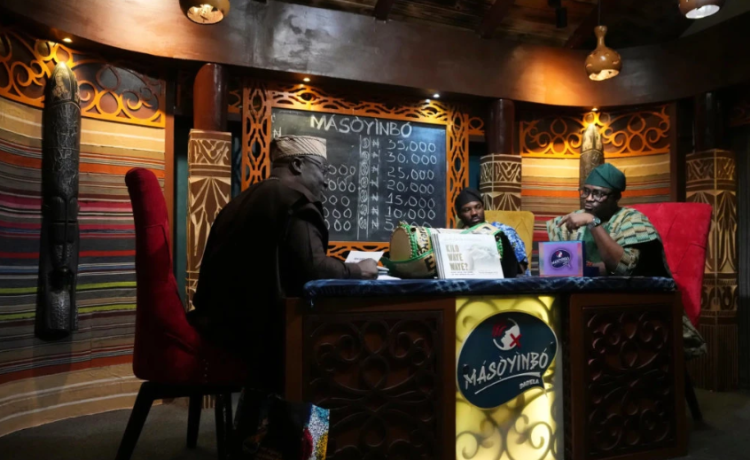
In Lagos, the television game show “Masoyinbo,” meaning “Do not speak English,” challenges contestants to communicate in Yoruba and tests their knowledge of Yoruba culture. The show has attracted Nigerians from both within the country and the diaspora.
Its creator, Olalekan Fabilola, says the programme’s popularity reflects a wider desire among young people to understand where they come from and reconnect with their roots.
Technology remains a major challenge
Despite the growing interest, African languages still face significant disadvantages online.
UNESCO has noted that only a small proportion of African languages have a meaningful digital presence. This creates difficulties for their use in artificial intelligence, online education, translation tools and other technologies.
Language experts warn that languages with little presence in modern technology risk becoming increasingly marginalised, particularly when younger generations primarily use global languages for education, business and employment.
The African Union and UNESCO are supporting efforts to document and revitalise indigenous languages, including efforts to make them more useful in digital technology and education.
A cultural revival across the continent
The renewed interest in African languages represents more than simply learning vocabulary. For many young Africans, it is about identity, family, history and cultural pride.
With social media and digital platforms making it easier for people around the world to learn and practise African languages, the movement could help preserve languages that have struggled for recognition while creating new opportunities in education, entertainment and technology.