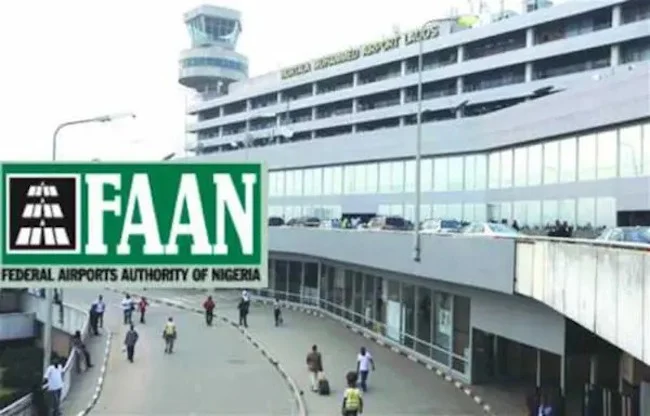
The Federal Airports Authority of Nigeria (FAAN) has cleared ride-hailing platform Bolt to resume operations at its airports immediately after both parties reached an operational agreement following a dispute that disrupted the service and triggered complaints from passengers.
FAAN’s Director of Public Affairs and Consumer Protection, Henry Agbebire, disclosed this in a statement issued on Thursday, saying the dispute followed nearly a decade of efforts to address safety, security and accountability concerns involving commercial and e-hailing vehicles operating at Nigerian airports.
According to FAAN, the concerns included unregulated pickups and passenger solicitation, as well as situations involving drivers operating across multiple mobility platforms simultaneously.
The authority apologised to passengers affected by the disruption, saying it had listened to concerns and made the necessary adjustments.
“We sincerely apologise for the difficulties this caused our passengers,” Agbebire said, adding that FAAN had “listened, reflected and made the necessary adjustments.”
FAAN also clarified the role of its Airport Car-Hire Management System, known as ACHRAMS, amid concerns raised over its introduction.
The authority said ACHRAMS is an airport car-hire management system and not an e-hailing platform. It stressed that the system does not compete with Bolt, Uber or other mobility platforms.
FAAN also dismissed claims that it controls fares at the airports, saying airport transportation fares had existed independently of the authority’s management system.
The authority said fares referenced in recent public discussions were not newly imposed by FAAN and were not created by ACHRAMS. It added that the rates were not substantially different from fares that existed previously.
According to FAAN, the system had simply made the existing fares more visible to passengers, which led to increased scrutiny when the rates were compared with the lower prices commonly available on e-hailing platforms.
The authority maintained that its actions were driven by regulatory, safety and security considerations rather than commercial interests.
FAAN also reiterated that it does not seek to create a monopoly over airport transportation and intends to maintain an environment where different mobility operators can provide services.
Meanwhile, the authority said discussions with other e-hailing operators were ongoing and expected to conclude in the coming days. FAAN did not disclose the names of the platforms still involved in discussions.
The agreement with Bolt means passengers can once again access the platform’s services at FAAN-operated airports, following the temporary disruption.
FAAN thanked passengers for their patience and understanding during the dispute and apologised for the inconvenience caused by the temporary suspension of services.