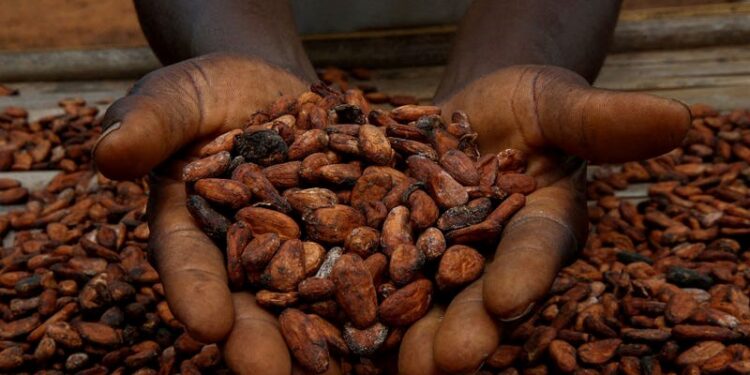
The Federal Government has dismissed reports suggesting it plans to ban the export of raw cocoa beans, clarifying that its policy is focused on expanding local processing capacity rather than restricting international trade.
The clarification follows growing public speculation that Nigeria intended to prohibit the export of raw cocoa as part of efforts to stimulate domestic value addition within the cocoa industry.
In a statement released over the weekend, the Minister of Agriculture and Food Security, Senator Abubakar Kyari, described the reports as inaccurate, stressing that they do not reflect the Federal Government’s position.
According to the minister, the government’s priority is to create an enabling environment that encourages investors to process more cocoa locally into finished and semi-finished products such as cocoa butter, cocoa powder and chocolate, while allowing the export of raw cocoa beans to continue as processing capacity gradually expands.
Kyari explained that Nigeria’s long-term objective is to earn more from its cocoa industry by exporting value-added products rather than relying predominantly on raw bean exports.
He, however, emphasised that this strategy does not include an outright ban on raw cocoa exports.
“Our goal is to create an enabling environment that encourages more investment in processing, increases farmers’ incomes, creates jobs, and enables Nigeria to earn more from every tonne of cocoa produced,” the minister said.
He noted that expanding domestic processing would strengthen Nigeria’s agricultural value chain, create employment opportunities and improve foreign exchange earnings through the export of higher-value cocoa products.
Nigeria is one of Africa’s leading cocoa-producing countries and remains an important supplier of cocoa beans to international markets.
However, industry experts have consistently argued that the country earns only a fraction of the potential value from cocoa because a significant proportion of production is exported in its raw form.
Countries that import cocoa beans often process them into chocolate and other finished products before exporting them at significantly higher prices.
The Federal Government believes increasing domestic processing will enable Nigeria to capture a larger share of the global cocoa value chain while boosting industrial development.
The minister also assured cocoa farmers, exporters and investors that the government remains committed to maintaining Nigeria’s reputation as a reliable supplier in the international cocoa market.
He stressed that current policies are designed to encourage private sector investment, improve processing infrastructure and support sustainable growth across the cocoa industry.
Agriculture stakeholders have welcomed the clarification, noting that uncertainty over export policies could affect investor confidence and international trade relationships.
Analysts say improving access to finance, expanding processing facilities and strengthening logistics will be essential if Nigeria is to achieve its ambition of becoming a leading exporter of value-added cocoa products.
They also believe a balanced policy that promotes local industrialisation without disrupting export markets could significantly increase farmers’ incomes while enhancing Nigeria’s competitiveness in the global cocoa industry.
As global demand for processed cocoa products continues to rise, the Federal Government says it will continue working with industry stakeholders to build a more competitive, resilient and value-driven cocoa sector.