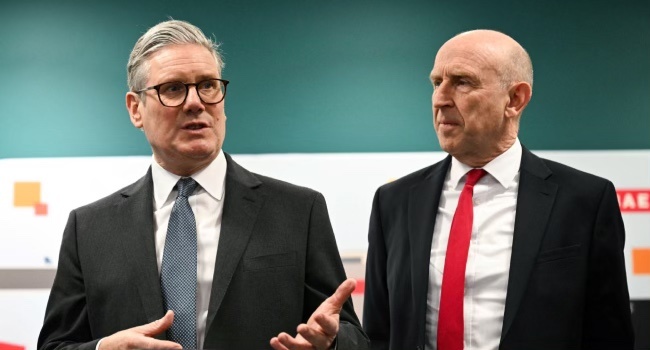
British Defence Secretary John Healey has resigned from his post, sharply criticising Prime Minister Keir Starmer and the Treasury over what he described as inadequate funding for the United Kingdom’s defence needs.
Healey’s unexpected departure on Thursday adds fresh political pressure on Starmer’s Labour government, coming at a sensitive time ahead of a key by-election and ongoing internal debates over national security priorities.
In a resignation letter published on his X account, Healey said he could not accept a Defence Investment Plan (DIP) that failed to provide sufficient resources for the armed forces.
“You have been unable, and the Treasury has been unwilling, to commit the resources that the nation needs to defend the country at this time of rising threats,” he wrote.
He warned that the proposed funding structure risked weakening Britain’s military readiness and potentially endangering personnel deployed on operations.
Healey said he was only given full sight of the Defence Investment Plan earlier in the week and argued that it would increase defence spending to just 2.68 per cent of GDP by 2030—below what he believes is necessary given current global security threats.
He added that without adequate investment, the UK could become “less safe”.
The resignation comes amid prolonged delays to the Defence Investment Plan, which is intended to outline military funding and capability development over the next decade. The plan had previously been expected in late 2025 but has repeatedly been postponed.
Prime Minister Keir Starmer has pledged to increase defence spending to 2.5 per cent of GDP from next year, with further rises planned to 3 per cent if Labour wins the next general election and potentially 3.5 per cent by 2035.
The government has framed the spending increases as part of its response to heightened global tensions, including Russia’s ongoing war in Ukraine and repeated calls from US President Donald Trump for NATO allies to boost military budgets.
Healey’s resignation has triggered concern within political and defence circles, with lawmakers warning that the move highlights internal tensions over how the government balances fiscal constraints with security commitments.
Tan Dhesi, chair of parliament’s defence committee, described the development as “a grave moment” and urged the government to take the warning seriously.
Healey, a senior Labour figure with decades of political experience, had been seen as a steady hand within the defence brief, and his departure raises questions about continuity in the UK’s military planning at a critical time.
The government has yet to announce his replacement, while officials insist that planned defence spending reforms will still ensure the armed forces receive necessary capabilities.
As political pressure mounts, attention is now shifting to Starmer’s leadership stability and whether further resignations or internal challenges could follow in the weeks ahead.