

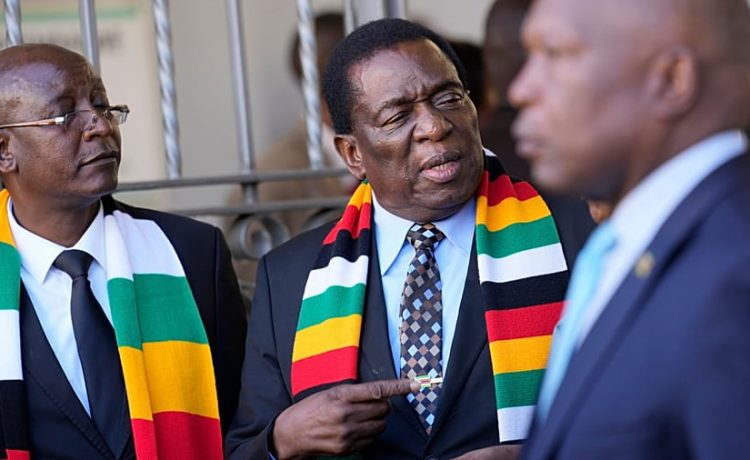
Zimbabwe’s parliament is reviewing a controversial constitutional amendment bill that could extend President Emmerson Mnangagwa’s stay in office until 2030 and significantly reshape the country’s electoral system.
The proposed legislation, introduced by Justice Minister Ziyambi Ziyambi to the lower house of parliament on Tuesday, seeks to extend the presidential term by two years while also abolishing direct presidential elections.
Under the proposed changes, the responsibility for selecting the head of state would be transferred to parliament, effectively removing the role of voters in choosing the country’s president.
The bill also proposes extending the tenure of members of parliament from five years to seven years, marking a major overhaul of Zimbabwe’s governance structure.
According to the government, a 90-day public consultation process was conducted prior to the introduction of the amendment and was widely supported.
However, opposition groups and civil society organisations have strongly disputed this claim, alleging that the consultation process was marred by intimidation and incidents of violence.
Reports suggest that some anti-amendment activists were assaulted by suspected state agents or detained during the consultation period.
Several legal challenges have also been filed in Zimbabwe’s courts seeking to halt or invalidate the amendment process.
Despite the opposition, political analysts expect the bill to pass through the lower house of parliament, where President Mnangagwa’s ZANU-PF party holds a two-thirds majority.
Critics argue that the amendment would further consolidate power within the ruling party, which has governed Zimbabwe since independence from Britain in 1980.
President Mnangagwa came to power in 2017 following a military-backed intervention that ousted longtime leader Robert Mugabe, who had ruled for 30 years.
The 83-year-old leader was later elected for two five-year terms in 2018 and 2023, which under the current constitution represents the limit for presidential tenure.
His time in office has been marked by persistent allegations of political repression, institutional weakening, and ongoing economic challenges.
The proposed constitutional changes have therefore intensified debate over democratic governance, term limits, and political accountability in Zimbabwe.
Observers say the outcome of the bill could significantly reshape the country’s political landscape ahead of future elections and further define the balance of power between the executive and parliament.



