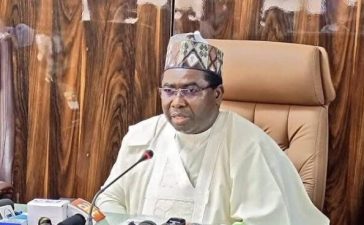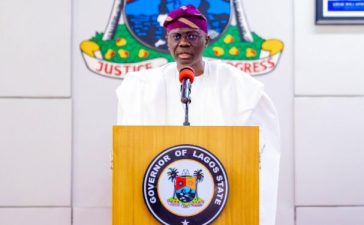
Lagos State, Ogun State, and Kaduna State have emerged as Nigeria’s top-performing subnational governments in the 2025 edition of the Phillips Consulting State Performance Index (pSPI), a nationwide assessment measuring governance quality, fiscal capacity, service delivery, and citizen perception.
The report, published by Phillips Consulting, ranked Lagos State first overall, followed by Ogun State in second place and Kaduna State in third, out of Nigeria’s 36 states and the Federal Capital Territory.
The 2025 pSPI assessment, conducted across Nigeria, used a hybrid methodology combining objective performance indicators (70%) and citizen perception surveys (30%). The survey sampled 9,498 respondents nationwide through SMS, digital platforms, and in-person engagements over a three-month period.
According to the report, Lagos State maintained its top position largely due to strong fiscal performance and economic independence. It ranked first in internally generated revenue (IGR) per capita, IGR per square kilometre, and revenue from trade routes. The state also derives about 69% of its revenue internally, the highest in the country.
However, despite its economic strength, Lagos recorded weaknesses in public service delivery. It ranked 36th in debt per capita, 32nd in hospital availability per population, and 36th in access to functional basic education facilities. It also placed 29th in ease of doing business, with citizen satisfaction scores reflecting concerns over infrastructure, healthcare, and education services.
Ogun State, ranked second overall, was described as an exceptional performer, driven by industrial activity and strong revenue generation capacity. It placed second nationally in IGR per capita and IGR-to-revenue ratio, while also ranking first in internet penetration and second in assets per capita. More than half of its revenue is internally generated, reflecting economic resilience.
Despite these gains, Ogun State faced challenges in debt management, ranking 32nd in debt per capita and 34th in liabilities per capita. It also recorded low citizen satisfaction levels in roads, healthcare, water supply, and business environment indicators.
Kaduna State secured third place and was classified as an excellent performer, largely due to its strong asset base and diversified economy. It ranked first nationally in assets per capita and performed strongly in revenue composition and industrial output. Its economy spans agriculture, manufacturing, commerce, and services.
However, the report highlighted major structural challenges, including insecurity and employment gaps. Kaduna ranked 32nd in ease of finding meaningful employment and recorded low satisfaction levels in healthcare, education, and security outcomes, particularly in rural areas.
Beyond the top three, the report noted significant upward mobility among several states. Adamawa State rose from 26th to 4th place, Niger State climbed from 29th to 5th, while Abia State made the most dramatic leap from 36th to 10th position, driven by fiscal reforms and improved governance indicators.
Regionally, the South-West emerged as the strongest performing zone, supported by Lagos and Ogun’s rankings, while the North-West remained competitive due to Kaduna’s performance. The South-East also showed improvement, driven by Abia’s strong upward movement.
Recent developments further underscore the rankings, with Ogun State announcing plans to generate ₦500 billion in internally generated revenue by 2026, signaling a push toward fiscal independence. Lagos State continues to strengthen its reputation as Nigeria’s commercial hub, while Kaduna State remains a key industrial and agricultural centre in northern Nigeria.
The report concludes that fiscal discipline, governance reforms, and improved service delivery are increasingly shaping state competitiveness across Nigeria, as subnational governments continue to compete for investment, development, and citizen trust.