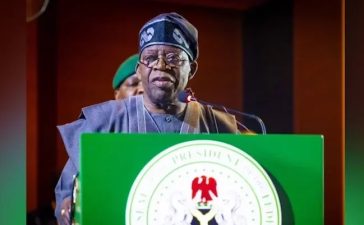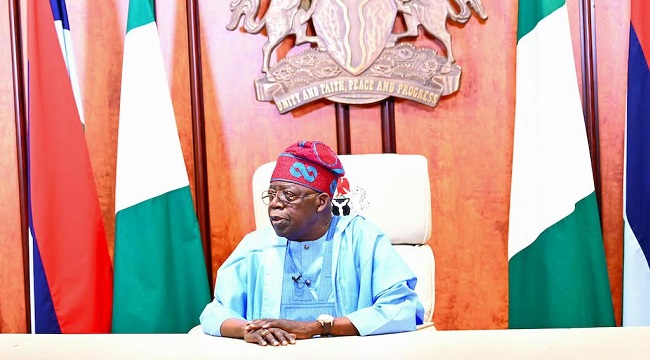
President Bola Ahmed Tinubu has said the removal of fuel subsidy by his administration prevented Nigeria from sliding into bankruptcy and laid the foundation for what he described as the country’s gradual economic recovery.
He made the remarks on Friday while hosting state governors who visited him to mark the Sallah celebration and the third anniversary of his administration.
The meeting was attended by governors from Lagos, Nasarawa, Jigawa, Sokoto, Kebbi, Taraba, Niger, Ekiti, Delta, Ondo, Edo, Adamawa, Benue, Enugu, Ogun, and Kogi States, as well as deputy governors from Borno and Kano.
President Tinubu acknowledged that the decision to remove fuel subsidy was difficult and painful for citizens, but maintained that it was necessary to prevent fiscal collapse and restore macroeconomic stability.
“It was challenging at the time, but we survived. Instead of bankruptcy, Nigeria has survived. The economy has recovered. It is growing. Agriculture is booming,” the President said.
He argued that years of heavy subsidy spending had drained public resources while benefiting only a small segment of the population, at the expense of critical investments in infrastructure, education, and healthcare.
According to him, the savings from subsidy removal are now being redirected toward development priorities, including agriculture, infrastructure, housing, and social investment programmes.
President Tinubu also pointed to ongoing infrastructure projects across the country, including road corridors and irrigation-linked developments, as evidence of economic progress under his administration.
He commended state governors for their cooperation in implementing reforms, noting that stronger federal–state collaboration has been key to stabilising the economy.
“The economy has recovered. Macroeconomic indices are doing very well. Construction is ongoing on roads and infrastructure; abandoned projects have been rehabilitated,” he said.
He added that improved fiscal conditions at the subnational level had reduced states’ dependence on federal borrowing, enabling them to meet salary obligations and fund development projects more effectively.
Vice President Kashim Shettima praised the President’s decision to remove the fuel subsidy, describing it as a bold and necessary reform that confronted long-standing structural distortions in the economy.
He said the administration chose to address deep-rooted economic challenges rather than delay difficult decisions, calling the reforms a “covenant with the future.”
The Chairman of the Nigeria Governors’ Forum, Governor Abdulrahman Abdulrazaq of Kwara State, also commended the policy shift, saying it had significantly increased revenue allocation to states.
He noted that improved fiscal inflows had enabled several states to clear salary arrears, settle pension obligations, and invest in infrastructure and social programmes.
According to him, the policy had reduced states’ reliance on borrowing and strengthened their financial positions.
Governor Hope Uzodinma, Chairman of the Progressive Governors Forum, described the President’s economic reforms as transformative, saying subnational governments had directly benefited from improved fiscal stability.
He said governors had assessed the administration’s performance positively and expressed support for its reform agenda.
Earlier, Lagos State Governor Babajide Sanwo-Olu welcomed visiting governors and encouraged continued collaboration between federal and state governments to sustain economic progress.
The Presidency said the administration remains committed to implementing reforms aimed at strengthening food security, creating jobs, reducing hardship, and promoting inclusive growth.
While acknowledging the economic challenges faced by citizens, President Tinubu assured that ongoing reforms were gradually stabilising the economy and improving long-term prospects for national development.