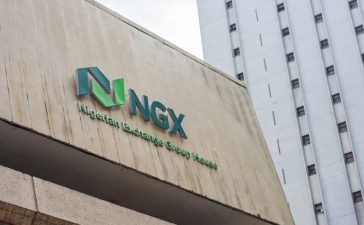
Nigeria’s stock market is expected to record a gradual recovery in the second half of 2026 as stronger corporate earnings, improving macroeconomic conditions and sustained economic reforms boost investor confidence, according to the Chief Executive Officer of HighCap Securities Limited, David Adonri.
Speaking during the Capital Market Correspondents Association of Nigeria (CAMCAN) Mid-Year 2026 Capital Market Review and Outlook in Lagos, Adonri said the recent decline in the equities market should not be viewed as a sign of weakness but as a normal correction driven by institutional investors repositioning their portfolios.
He explained that the adjustment followed the strong rally experienced after the Federal Government’s economic reforms and does not reflect any deterioration in the underlying fundamentals of the Nigerian capital market.
“The current market correction is a result of institutional investors repositioning their portfolios and not an indication of a breakdown in market fundamentals,” Adonri stated.
According to him, the equities market is expected to regain momentum in the second half of the year as listed companies continue to post stronger financial results and the broader economy shows signs of improvement.
Adonri noted that although interest rates are likely to remain elevated for some time, Exchange Traded Products (ETPs) are expected to gradually align with their intrinsic values as market conditions improve.
He also projected that the activation of Nigeria’s commercial papers and derivatives markets would significantly deepen the country’s capital market by expanding investment opportunities, improving liquidity and attracting more sophisticated investors.
One development he described as potentially transformative is the expected listing of Dangote Refinery on the Nigerian Exchange.
According to him, the listing would represent a major milestone capable of increasing the size, depth and attractiveness of Nigeria’s capital market while drawing greater domestic and international investor participation.
Reviewing the country’s economic outlook, Adonri said Nigeria’s ongoing reforms are beginning to receive positive recognition from international financial institutions and global credit rating agencies.
He pointed out that the International Monetary Fund (IMF) has acknowledged improvements in Nigeria’s macroeconomic environment as the government’s reforms continue to deliver measurable results.
He added that the country’s sovereign credit profile has also strengthened in recent months.
According to him, S&P Global Ratings upgraded Nigeria’s sovereign rating from B- to B with a stable outlook in May 2026.
He further noted that Fitch Ratings affirmed Nigeria’s B rating with a stable outlook, while Moody’s upgraded the country’s rating from Caa1 to B3, reflecting growing confidence in the nation’s economic management.
Adonri attributed these positive assessments to improved foreign exchange stability, rising external reserves, increased crude oil production and stronger policy implementation.
He also cited growth projections from major economic institutions.
According to him, both the World Bank and the IMF expect Nigeria’s economy to grow by 4.1 per cent in 2026, while the Central Bank of Nigeria projects an even stronger growth rate of 4.49 per cent.
He said higher crude oil production, increased domestic refining capacity, improving foreign reserves and the relative stability of the naira are expected to provide additional support for economic growth and investor confidence.
Despite the positive outlook, Adonri cautioned that several domestic and international risks could limit the pace of market recovery.
He identified persistent inflation, the build-up to the 2027 general elections, insecurity, multiple capital-raising programmes by companies and the ongoing conflict in the Gulf region as major factors capable of affecting investor sentiment and capital inflows.
According to him, political and socioeconomic developments remain key determinants of capital market performance.
He stressed that policy consistency, macroeconomic stability and effective implementation of ongoing reforms will be critical to sustaining investor confidence and supporting long-term market growth.
Adonri expressed confidence that once institutional investors complete their portfolio adjustments, the Nigerian stock market will be well positioned for a gradual rebound during the second half of 2026, supported by stronger fundamentals and continued reform momentum.