The Federal Government has banned recipients of honorary degrees from using the title “Dr” before their names in official, academic, or professional settings, declaring such usage a form of misrepresentation that will now be treated as academic fraud.
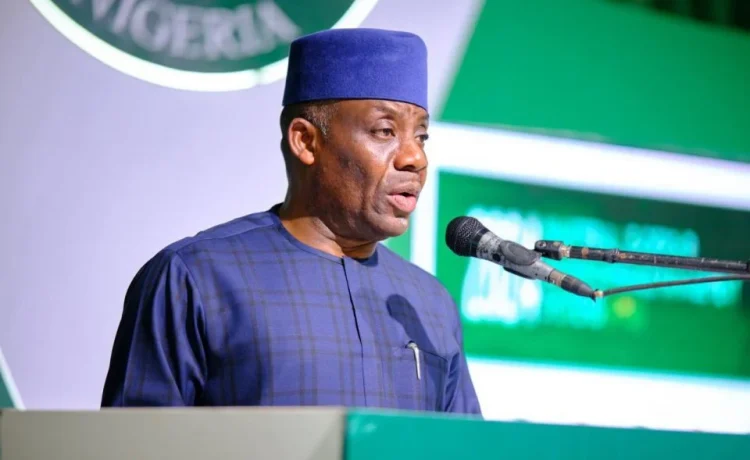
The announcement was made on Wednesday by the Minister of Education, Tunji Alausa, during a briefing at the Presidential Villa in Abuja. He was accompanied by the Minister of State for Education, Suwaiba Ahmad.
Alausa explained that the Federal Executive Council approved a new uniform policy governing the award and use of honorary degrees by Nigerian universities. The reform, he said, is aimed at curbing the rising abuse of honorary titles and restoring integrity to the academic system.
“The recent trend we’ve seen with the award of honorary degrees has revealed a growing abuse and politicisation of this academic privilege,” the minister said.
Under the new guidelines, recipients of honorary degrees are no longer permitted to prefix “Dr” to their names. Instead, they must use the full honorary designation after their names, such as “D.Lit. (Honoris Causa)” or “LL.D. Hons.”
For example, the ministry stated that acceptable usage would be “Chief Louis Clark, D.Lit. (Doctor of Literature, Honoris Causa)” rather than “Dr Louis Clark.”
The policy further stipulates that misrepresentation of honorary degrees as earned academic qualifications will now be considered academic fraud, with legal and reputational consequences.
The approved framework also limits honorary degrees to four categories: Doctor of Laws (LL.D), Doctor of Letters (D.Lit), Doctor of Science (D.Sc), and Doctor of Humanities (D.Arts). Additionally, universities without active PhD programmes are barred from awarding honorary degrees altogether.
According to the minister, all honorary awards must clearly state “honorary” or “Honoris Causa” on certificates and official references.
The policy is being enforced by the National Universities Commission, which has been tasked with issuing compliance directives to vice-chancellors, registrars, and governing councils nationwide.
Alausa noted that the move is intended to address long-standing concerns about the commercialisation of honorary degrees, where awards have allegedly been influenced by financial contributions and political patronage rather than merit.
He referenced earlier attempts at reform, including the 2012 Keffi Declaration by the Association of Vice-Chancellors of Nigerian Universities, which lacked legal backing and was widely disregarded.
“The association doesn’t have any legal backing to enforce anything. That is why we brought this to the Federal Executive Council, which now gives it legal and executive backing,” he said.
The ministry also plans to monitor convocation ceremonies, publish an annual list of legitimate honorary degree recipients, and collaborate with the media to prevent misuse of academic titles.
With the new policy now in force, authorities say the goal is to protect the integrity of earned academic qualifications and restore credibility to Nigeria’s higher education system.