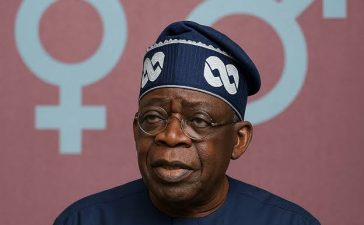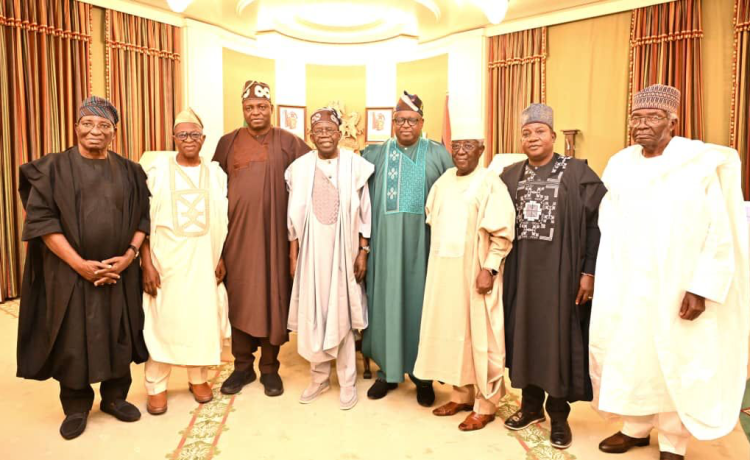
President Bola Tinubu has called on leaders from Plateau State to return home and commit to lasting peace, urging them to address long-standing grievances fueling recurring violence in the region.
The President made the appeal on Tuesday at the State House, Abuja, during a high-level meeting with a 32-man delegation led by Governor Caleb Mutfwang, alongside former governors, traditional rulers, religious leaders, youth representatives, and political stakeholders.
Tinubu charged the delegation to critically review past government White Papers on insecurity and develop practical, implementable solutions aimed at ending cycles of violence in the state.
“No protocols, no hinderances… we are here to speak our minds and find a permanent solution to a recurring conflict and chaos,” the President said. “Let us accept one resolution—tolerance for every inhabitant.”
He emphasized the need for unity, urging leaders to discourage ethnic and religious mobilisation that fuels conflict. Tinubu also called on authorities to identify and prosecute individuals behind violence in the state.
The meeting featured prominent figures, including National Chairman of the APC, Prof. Nentawe Yilwatda; former governors Senator Simon Lalong, Senator Jonah Jang, Joshua Dariye, and Fidelis Tapgun; as well as traditional rulers such as the Emir of Wase and the Gbong Gwon Jos.
President Tinubu also approved ₦2 billion in relief support for victims of the March 29 violence in Angwan Rukuba, Jos North Local Government Area, according to the Minister of Humanitarian Affairs, Dr Mohammed Dorro.
Participants at the meeting repeatedly identified key drivers of conflict in Plateau State as indigene-settler tensions, religion, ethnicity, and farmer-herder clashes. Youth representatives pledged to support peace-building efforts and work with leaders to promote stability.
Governor Caleb Mutfwang described the meeting as historic, noting it was the first time all living former governors of Plateau State had gathered in one forum. He pledged collective commitment to rebuilding trust and fostering unity.
“We are determined to rise above all divides of religion and ethnicity and build a state we can all be proud of,” Mutfwang said, adding that the state would work to “turn conflict into opportunity” under federal support.
Traditional leaders also urged the Federal Government to strengthen security presence in the state, deploy surveillance infrastructure, and consider the establishment of state police as part of long-term reforms.
The Gbong Gwon Jos, HRM Jacob Gyang Buba, commended the President’s intervention and called for improved security measures, including troop deployment and CCTV installations, while praising ongoing federal appointments of Plateau indigenes.
Former Deputy Speaker Idris Wase highlighted the need for strict enforcement of the rule of law and warned that drug abuse was worsening insecurity in the state.
The meeting ended with a collective commitment by stakeholders to pursue reconciliation, strengthen governance structures, and restore lasting peace to Plateau State.