The House of Representatives has approved a $516 million external loan request by President Bola Tinubu to fund sections of the Sokoto–Badagry Superhighway project.
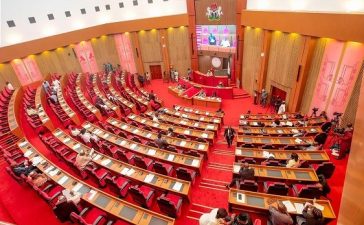
The approval was granted on Tuesday during plenary in Abuja after the deputy chairman of the House Committee on Aids, Loans and Debts Management, Abdullahi Rasheed, presented the committee’s report recommending the facility.
President Tinubu had earlier written to the National Assembly in a letter dated Thursday, April 23, seeking approval for a $516,333,007 syndicated loan from Deutsche Bank AG to finance initial phases of the major highway project.
Lawmakers adopted the committee’s recommendation, clearing the way for the federal government to proceed with the funding arrangement.
The Sokoto–Badagry Superhighway is designed as a major transport corridor linking Sokoto, Kebbi, Niger, Kwara, Oyo, Ogun, and Lagos states, stretching from Illela in the northwest to Badagry in the southwest. The full project spans about 1,000 kilometres, with the first phase covering approximately 120 kilometres.
According to the proposal, the loan will be arranged through a Deutsche Bank syndicated facility and backed by a partial risk guarantee from the Islamic Corporation for the Insurance of Investment and Export Credit. It carries a nine-year tenure, including a three-year grace period, and an interest rate pegged at SOFR plus 5.3 percent.
In addition, the federal government is expected to contribute over N265 billion in counterpart funding for land acquisition, compensation, and related project costs.
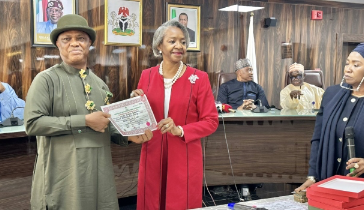
During deliberations, Senate President Godswill Akpabio defended the borrowing plan, arguing that infrastructure-based loans can enhance economic growth and improve repayment capacity.
However, the approval has continued to generate debate among stakeholders over Nigeria’s rising debt profile and fiscal sustainability. Critics have warned that increasing reliance on external borrowing could heighten long-term repayment pressures.
Former Vice President Atiku Abubakar, through his aide Phrank Shaibu, questioned the government’s fiscal discipline, while analyst Seun Onigbinde raised concerns about the structure and sustainability of new loans.
Recent data from the Debt Management Office shows Nigeria’s debt servicing rose to about N16 trillion in 2025, up from N13.02 trillion in 2024, representing a 22.9 percent increase. Federal Government bonds accounted for a significant portion of domestic debt servicing, while external debt obligations reached $5.15 billion, underscoring growing pressure on public finances.
Despite concerns, supporters of the project argue that the highway could boost regional connectivity, trade, and economic integration across multiple states once completed.