The Federal Competition and Consumer Protection Commission (FCCPC) has clarified that air passengers in Nigeria are entitled to basic welfare support, including food, airtime, and in some cases accommodation, during prolonged flight delays or cancellations.
Speaking on Channels Television’s The Morning Brief, FCCPC Director of Corporate Affairs, Ondaje Ijagwu, explained that airlines have clear obligations to support stranded passengers depending on the length and severity of delays.
“If your flight is delayed, you are supposed to be given refreshments. After some more hours of delay, you are supposed to be given airtime,” Ijagwu said, adding that passengers in distress should be assisted in line with regulatory expectations.
He further noted that in cases of sudden flight cancellations, airlines are expected to provide transportation and accommodation where necessary, especially when airports are far from city centres.
“When it comes to cancelling the flight abruptly… transport will be provided because the airport is quite far from the town or city. Apart from that, accommodation could be provided in certain instances,” he added.
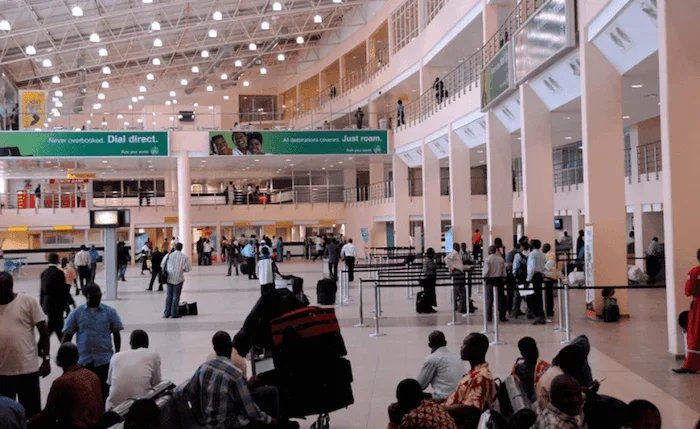
The FCCPC’s clarification comes amid increasing disruptions across Nigerian airports, with passengers frequently stranded due to repeated delays and cancellations. Many travellers have recently taken to social media to share experiences of being left without support at terminals.
At the Nnamdi Azikiwe International Airport in Abuja, several passengers were reportedly stranded on Monday after multiple rescheduling of flights by airlines, with no transport or lodging arrangements provided.
The situation has been worsened by rising operational costs in the aviation sector, particularly the sharp increase in Jet A1 fuel prices. The Airline Operators of Nigeria (AON) has warned that the cost of aviation fuel has surged from about ₦900 per litre to ₦3,300 per litre within weeks, a jump of over 300 per cent.
Amid the crisis, Minister of Aviation and Aerospace Development, Festus Keyamo, has suggested the likelihood of higher airfares to sustain airline operations and prevent shutdowns.
Airline operators have said they are already operating under extreme financial pressure, with revenues reportedly insufficient to cover fuel costs alone, despite efforts to keep services running.
As delays and cancellations persist, regulators and industry stakeholders are under increasing pressure to enforce passenger rights while addressing the deeper structural challenges facing Nigeria’s aviation sector.