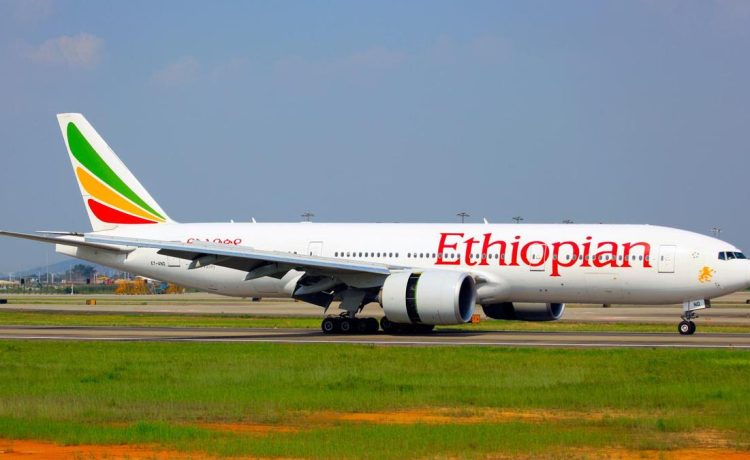
Africa’s largest airline, Ethiopian Airlines, has announced plans to purchase six additional Boeing 787-9 Dreamliner aircraft as part of its strategy to expand long-haul operations across Africa, the United States, Europe, and Asia.
The airline confirmed the new orders on Monday following a signing ceremony at Boeing headquarters near Washington, D.C.
Group Chief Executive Officer Mesfin Tasew said the airline converted six existing purchase options into firm orders, adding to a previously announced order of 20 Boeing 787 aircraft, including nine placed in January.
According to Tasew, the new aircraft will begin delivery in 2028.
“There are mature routes we need,” he said, highlighting demand for larger aircraft across several African destinations. He also noted that aircraft shortages had previously limited expansion into long-haul destinations such as Australia.
The latest expansion aligns with Ethiopian Airlines’ broader growth strategy, which includes strengthening its global network while increasing capacity on high-demand routes.
The signing ceremony was attended by officials from the U.S. administration, which has prioritised boosting exports from Boeing as part of its industrial and trade strategy.
Tasew also held discussions in Washington regarding the airline’s ambitious $12.5 billion airport development project in Ethiopia.
The project is being developed in Bishoftu, located about 45 kilometres southeast of the capital, Addis Ababa.
Once completed in 2030, the new airport is expected to become the largest in Africa, with capacity for up to 60 million passengers annually.
Tasew said the facility would feature modern aviation infrastructure and multiple runways designed to accommodate future traffic growth.
“The new airport will have a capacity of 60 million passengers with all the latest ultramodern facilities,” he said. “We want this airport to be the Dubai of Africa, or the Istanbul of Africa.”
The airline, which is state-owned, has already begun construction of the four-runway airport, which is expected to significantly ease congestion at its current main hub in Addis Ababa.
Officials say the existing airport will reach full capacity within the next two to three years, making the new facility essential for continued growth.
Financing for the project includes support from the African Development Bank, which committed $500 million in lending and is helping mobilise an additional $8.7 billion from other partners.
Tasew said the airline has also received strong interest from U.S.-based financial institutions willing to participate in funding the project.
“We are very happy with the response from U.S. financial institutions. Several of them have expressed interest to participate,” he said.
Ethiopian Airlines has in recent years positioned itself as a key aviation hub for Africa, connecting multiple continents through its Addis Ababa base.
Industry analysts say the latest aircraft order and airport expansion plan underscore the airline’s ambition to solidify its dominance in African aviation while competing more directly with global carriers on long-haul routes.