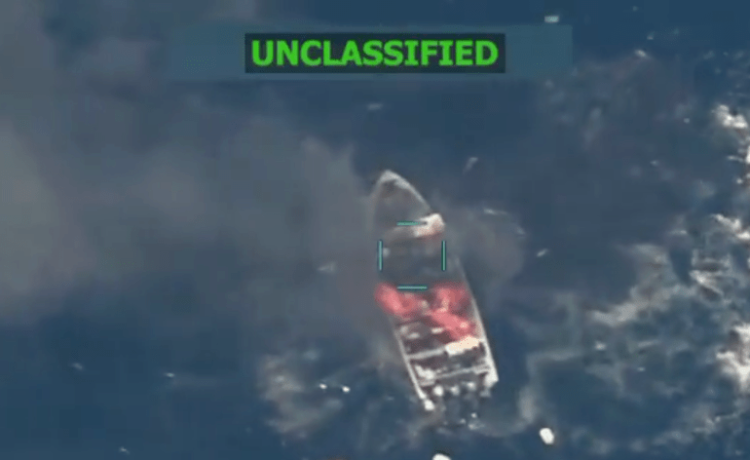
The United States Southern Command said it carried out a strike on an alleged drug-trafficking vessel in the Caribbean on Sunday, killing three people and bringing the reported death toll from the controversial campaign to at least 180.
The operation is part of an ongoing crackdown launched by the administration of Donald Trump, which has described drug-smuggling networks in Latin America as “narco-terrorist” organisations.
According to a statement posted on X by the command responsible for US forces in the region, intelligence had identified the vessel as operating along known narcotics trafficking routes.
“Intelligence confirmed the vessel was transiting along known narco-trafficking routes in the Caribbean and was engaged in narco-trafficking operations. Three male narco-terrorists were killed during this action,” the command said.
The Trump administration began targeting suspected drug-smuggling boats in September last year, arguing that the United States is effectively at war with criminal networks responsible for narcotics trafficking into North America.
US military officials say at least six such strikes were carried out in April alone, as Washington intensifies maritime operations aimed at disrupting drug supply routes across the Caribbean and Latin America.
However, the campaign has drawn criticism from international legal experts and human rights groups, who question the legality of using military force against vessels suspected of drug trafficking.
Critics argue that the United States has not publicly presented definitive evidence linking the targeted vessels to criminal activity.
Rights organisations have also warned that the strikes could amount to extrajudicial killings if the individuals targeted were civilians who did not pose an immediate threat to the United States.
The debate has intensified as the number of casualties linked to the operations continues to rise, raising broader questions about the legal framework governing the use of military force in international waters.
Despite the criticism, US authorities maintain that the operations are necessary to disrupt narcotics networks that fuel organised crime and drug distribution across the region.