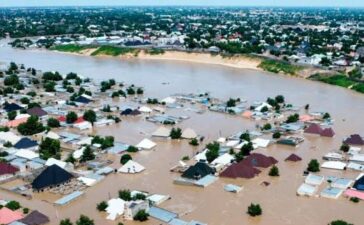
The Lagos State Government has secured a $7.5 million flood insurance policy designed to provide relief to vulnerable residents during disasters. The policy, announced on Thursday by the Insurance Development Forum (IDF), covers up to four million people in the coastal megacity.
The insurance marks a key milestone for the Tripartite Agreement Programme, a partnership between the IDF, the United Nations Development Programme (UNDP), and Germany’s Federal Ministry for Economic Cooperation and Development (BMZ), working through the InsuResilience Solutions Fund (ISF) to enhance climate risk resilience in developing countries.
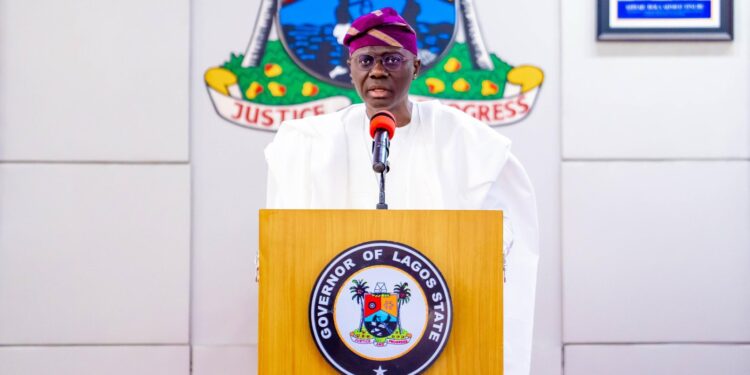
Governor Babajide Sanwo-Olu stressed the urgency of climate action, noting that inaction could cost Lagos nearly $40 billion by 2050, impacting people, infrastructure, and the economy. “Our wetlands and biodiversity are also under threat. This pioneering parametric flood insurance policy strengthens our ability to protect lives, livelihoods, and public finances while embedding climate risk management into Lagos State’s long-term development planning,” he said.
Dr. Katharina Stasch, Director-General for Multilateral Development Policy, Transformation, Climate at BMZ, highlighted the policy as an example of how government, insurance, and development partners can collaborate effectively to tackle climate risks.
Lagos, a commercial hub and coastal city, suffers from seasonal flooding, often causing significant damage to property and loss of life. Last year, the Lagos State Government unveiled plans to integrate estate lakes, canals, and pumps into a comprehensive flood management system over 24 months, targeting areas most vulnerable to tide-locked flooding.
Commissioner for Environment and Water Resources, Tokunbo Wahab, explained that the initiative aims to create a Blue-Green Network linking lakes, canals, and green corridors to temporarily store and gradually release rainwater, preventing drainage systems from being overwhelmed during heavy rainfall.
The flood insurance policy, combined with the city’s ongoing infrastructure projects, represents a strategic approach to climate resilience and disaster preparedness in Lagos.