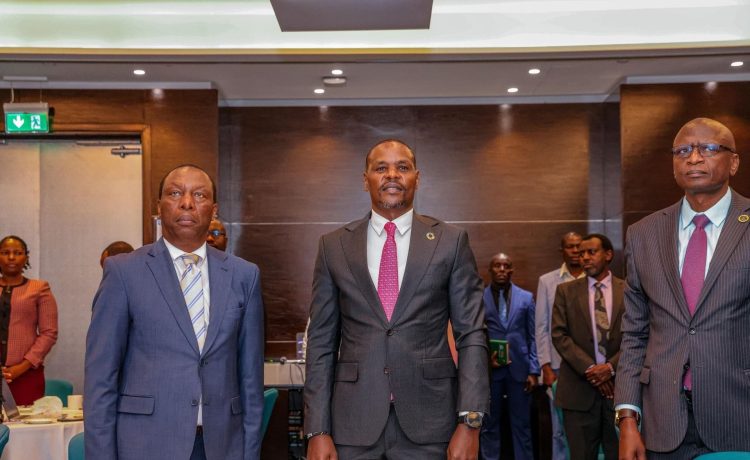
The Government of Kenya announced plans to invest about $350 million over the next decade to restore ecosystems and improve livelihoods in the Lake Victoria basin. Officials approved the Multisectoral and Multiphase Program for Ecosystem Stabilization and Socio-Economic Development of the Basin (rMPA) on February 23 during a high-level meeting.
The program focuses on county-level priorities, including watershed restoration, sanitation services, fisheries development, sustainable agriculture, and creation of green and blue jobs. It also aims to tackle challenges linked to pollution, ecosystem degradation, rapid urbanization, and climate variability, according to Kenya’s Ministry of Environment and Climate Change.
rMPA will operate under the regional framework of the Lake Victoria Basin Commission and is financed through concessional loans from the World Bank, government contributions, and complementary investments. Principal Secretary Festus K. Ng’eno said $100 million has already been allocated in the 2027/28 fiscal budget for the program’s initial phase.
The initiative builds on the earlier Lake Victoria Environmental Management Project phases I and II (LVEMP I & II), which established foundations for transboundary environmental management. Lake Victoria, the world’s second-largest freshwater lake, spans 68,800 square kilometers and supports over 47 million people across Kenya, Tanzania, Uganda, Rwanda, and Burundi.
Authorities warned that decades of pollution from agricultural runoff, untreated wastewater, and industrial discharge have degraded the lake. The World Bank highlighted that without urgent intervention, continued deterioration could exacerbate poverty, environmental risks, and threaten the region’s long-term sustainability.
The approval meeting included representatives from the World Bank, national and local governments, and key ministries, underscoring the program’s multisectoral and collaborative approach.