The United States military says it carried out “self-defence” strikes on Iran overnight and intercepted multiple ballistic missiles and drones targeting ships and Gulf states, as tensions across the region continue to escalate.
US Central Command (Centcom) said the strikes targeted a military installation on Qeshm Island in the Strait of Hormuz, describing the operation as a response to attempted Iranian attacks across the Middle East.
According to Centcom, the strike hit an Iranian military ground control station used in coordination of regional operations.
Iran, however, said it launched attacks on US bases and helicopters in a “regional country” using missiles and drones in retaliation for earlier US operations.
Centcom reported that Iran fired two missiles toward Kuwait and three toward Bahrain, all of which were either intercepted or disintegrated before impact.
Despite this, Kuwait’s military said Iranian drones struck Kuwait International Airport, causing significant structural damage and injuries. Air traffic was temporarily suspended following the incident.
A spokesperson for Kuwait’s defence ministry described the attack as “criminal Iranian aggression,” adding that the injured were receiving treatment.
The latest exchanges come amid stalled ceasefire negotiations between Washington and Tehran following unsuccessful talks over the weekend.
Centcom also said it shot down three Iranian drones targeting civilian vessels in international waters, claiming they posed a threat to maritime security.
Iran’s Islamic Revolutionary Guard Corps (IRGC) warned that any disruption of security in the Strait of Hormuz would come at a “heavy price” for US forces.
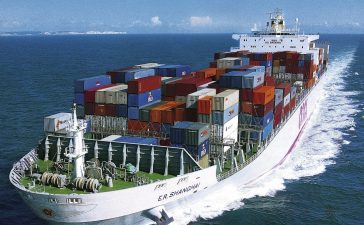
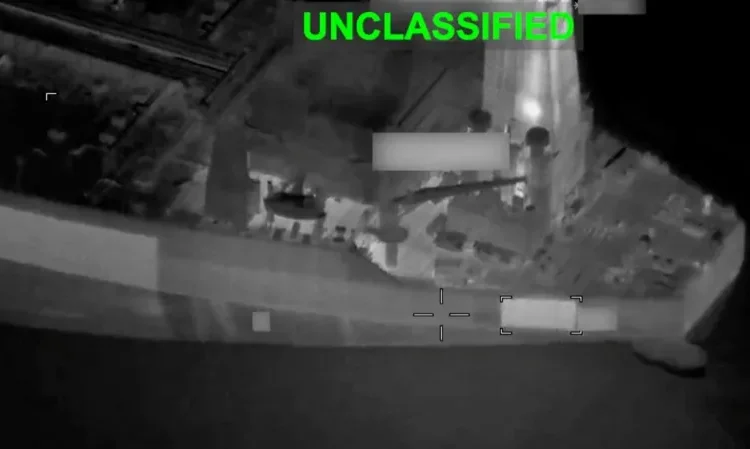
The US military further stated that it had disabled an unladen oil tanker sailing toward Iran, as part of ongoing enforcement actions linked to a naval blockade of the Strait of Hormuz.
According to Centcom, the vessel ignored repeated warnings before a missile strike disabled its engine room. The operation was reportedly captured on video and released by US authorities.
Since the blockade began on April 13, Centcom says six commercial vessels have been disabled and more than 120 redirected away from the region.
The escalation follows remarks by US President Donald Trump, who said Iran “really wants to make a deal,” while urging critics to remain calm as negotiations continue.
US Secretary of State Marco Rubio told Congress that any sanctions relief for Iran would be conditional on its nuclear programme.
He also stated that “the war is over,” though lawmakers questioned the clarity of the US strategy in ending the conflict.
Iranian officials have rejected claims of shifting negotiation terms, accusing Washington of inconsistent positions and contradictory demands.
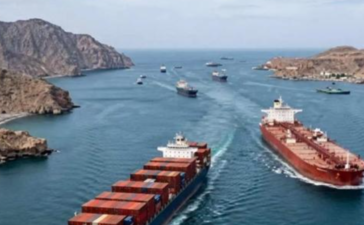
The Strait of Hormuz, a critical global shipping route, remains at the centre of the confrontation, with both sides accusing each other of escalating instability in the region.
International observers warn that continued military exchanges could further disrupt global oil trade and heighten geopolitical tensions across the Middle East.