Uganda has introduced a mandatory 21-day quarantine for citizens returning from the Democratic Republic of Congo (DR Congo) who have a history of travel to the neighbouring country, as health authorities strengthen measures to prevent the spread of Ebola.
The directive was announced on Sunday, October 25, by Uganda’s Health Minister, Chris Baryomunsi. The decision comes amid growing concern about the spread of the Bundibugyo strain of Ebola across parts of Central and East Africa, with imported cases confirmed in Kenya and Nigeria.
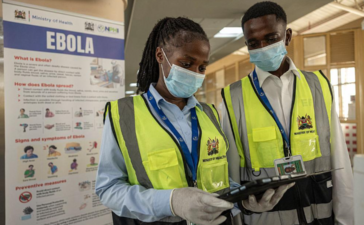
According to reports published on October 25 and 26, Uganda has also strengthened screening at Entebbe International Airport and land border crossings. Travellers entering the country are required to complete passenger locator forms to assist health officials in tracing movements if a suspected infection is identified.
The measures are intended to improve early detection and reduce the possibility of an infected traveller transmitting the virus to others before symptoms become apparent.
Regional outbreak raises concern
The new restrictions come as DR Congo continues to face a serious Ebola outbreak. In its October 23 situation update, the World Health Organization reported 9,704 confirmed cases and 4,687 deaths across 66 health zones in eight provinces, based on figures available up to October 20.
Kenya has also reported infections linked to a case imported from DR Congo through Uganda. Nigeria confirmed an imported case on October 20 involving a patient who had travelled from Uganda to Abuja.
The developments have increased attention on international airports, road crossings and other routes used by travellers moving between affected countries.
Ugandan authorities are investigating the possible source of Nigeria’s case in cooperation with Nigerian officials and international partners. Swiss authorities have suggested that the patient may have contracted the virus in Uganda, but Ugandan officials have disputed conclusions about the patient’s movements, saying investigations remain necessary.
Genomic findings reported by Nigerian authorities showed similarities between the virus detected in Nigeria and the strain identified in Kenya. However, authorities have not established a direct connection between the two patients.
Surveillance and contact tracing
Uganda has said that 60 people identified as contacts in connection with the Kenyan case completed their 21-day monitoring period without developing symptoms and were discharged.
The country is continuing to monitor travellers and coordinate with neighbouring states to identify potential exposure risks. Such measures are important because Ebola symptoms may take up to 21 days to develop after exposure.
Health officials must also balance preventive measures with the need to avoid unnecessary disruption to travel, trade and cross-border movement.
The World Health Organization has advised against general restrictions on travel to or trade with affected countries, while recommending stronger surveillance, early case detection and coordinated public health responses.
Implications for Africa
The latest decision highlights the difficulty of containing infectious diseases in a region where people regularly cross national borders for work, family visits, trade and transportation.
Effective control depends on more than quarantine alone. Authorities need trained health workers, reliable laboratory testing, adequate protective equipment, transparent communication and cooperation between countries.
Travellers should follow official health instructions and promptly report symptoms or known exposure to health authorities. They should avoid relying on rumours or unverified social media reports when making decisions about the outbreak.
Uganda’s measures represent a precautionary response to a regional health emergency. Their effectiveness will depend on consistent implementation, timely investigations and continued collaboration with neighbouring countries.