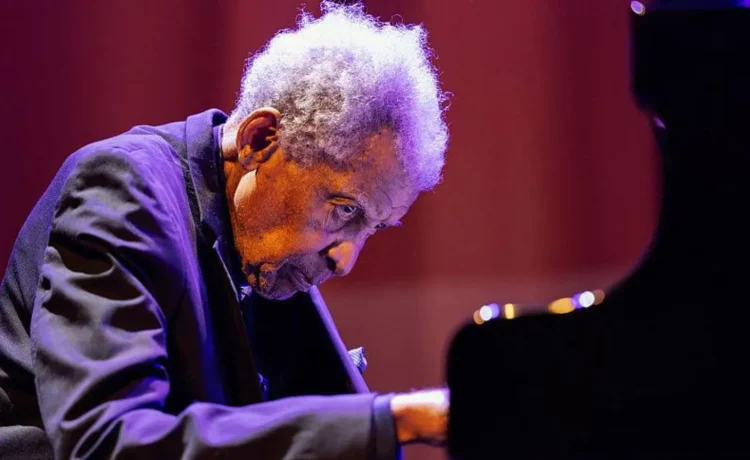
South African jazz legend Abdullah Ibrahim, widely regarded as one of the defining figures of modern African jazz, has died at the age of 91.
His family announced that he passed away peacefully in Germany after a short illness, surrounded by loved ones.
In a statement, they said Ibrahim’s life and work reflected both his musical genius and deep political consciousness, noting that his “creations honoured the South Africa that shaped his political commitment and musical brilliance.”
South African President Cyril Ramaphosa paid tribute to the musician, describing his career as one that enriched both the country and the global music landscape.
Born Adolph Johannes Brand in Cape Town in 1934, Ibrahim began playing piano at an early age and was composing music by the time he was seven.
Over a career spanning more than eight decades, he produced dozens of recordings and became one of the most influential jazz musicians to emerge from Africa.
He initially performed under the name Dollar Brand before converting to Islam in the late 1960s, after which he adopted the name Abdullah Ibrahim.
During his early career, he played in several groups, including the Jazz Epistles alongside another South African jazz icon, Hugh Masekela.
As apartheid tightened its grip on South Africa, many jazz musicians faced increasing restrictions due to the genre’s association with cultural resistance and racial integration.
These political pressures led to the breakup of his group, after which Ibrahim relocated to Switzerland.
His talent later caught the attention of American jazz legend Duke Ellington, who helped introduce him to audiences in the United States.
Ibrahim developed a distinctive musical style that blended South African melodic traditions with jazz improvisation, earning him international acclaim.
One of his most celebrated compositions, “Mannenberg,” released in 1974, became an unofficial anthem linked to the anti-apartheid struggle.
Despite living abroad for much of his life, Ibrahim remained closely connected to South Africa, frequently returning to perform and record.
His final live performance took place at the Cape Town International Jazz Festival just months before his death, where he was praised for his enduring artistry and stage presence.
His partner, Dr Marina Umari, said he died with South Africa and its people in his heart, adding that his love for his homeland never faded despite years spent abroad.
Tributes continue to pour in from around the world, honouring a musician whose work helped shape both South African identity and global jazz history.