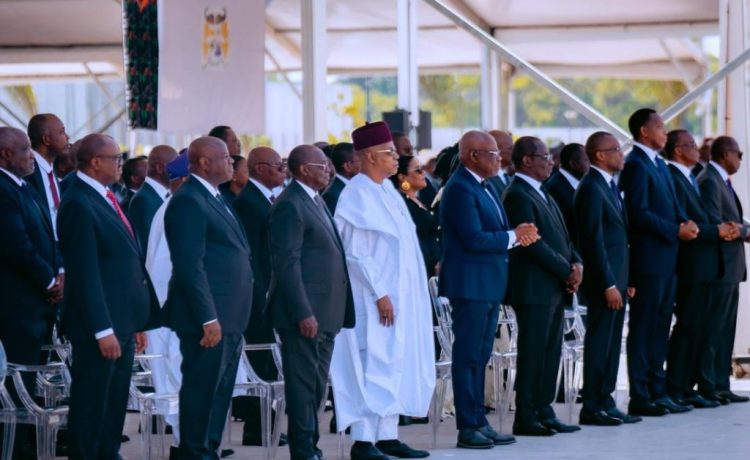
Vice President Kashim Shettima has reaffirmed Nigeria’s commitment to strengthening bilateral relations with the Republic of Benin, describing both nations as partners with a shared destiny rooted in history, culture and regional responsibility.
Shettima made the remarks on Sunday in Cotonou, where he represented President Bola Ahmed Tinubu at the inauguration of President Patrice Talon’s successor, President Romuald Wadagni.
Speaking at the ceremony held at the Presidential Palace, the Vice President said Nigeria’s participation reflected the Tinubu administration’s commitment to deepening cooperation with neighbouring countries and promoting stability within West Africa.
“Our presence here in Cotonou underlines President Tinubu’s unwavering, deep-seated commitment to strengthening ties with our neighbours,” Shettima said.
He described Nigeria and Benin as nations bound by centuries of cultural, social and economic ties that transcend modern borders.
According to him, the two countries share a nearly 600-kilometre border that cuts across six Nigerian states, with communities on both sides maintaining close ethnic and familial links.
“There are Yoruba people on this side of the border just as there are in Nigeria. We are essentially one people tied to a common destiny,” he added.
Shettima emphasised the importance of continued collaboration in promoting democracy, peace and economic development across the ECOWAS sub-region.
He noted that trade between Nigeria and Benin currently stands at about $2 billion annually, while an estimated five million Nigerians reside in Benin Republic.
The Vice President also highlighted ongoing cooperation in border security, infrastructure development and grassroots governance.,
He referenced a Memorandum of Understanding signed last year between both countries to strengthen collaboration among local governments, traditional rulers and border communities in addressing cross-border crime and boosting economic activity.
The agreement has helped improve coordination in key border towns such as Seme, Igbokofi and Ilara, enhancing trade, agriculture and security cooperation.
Shettima further noted that both countries are implementing regional economic frameworks under the ECOWAS Trade Liberalisation Scheme and the Common External Tariff system.
He added that the ECOWAS protocol on free movement continues to allow citizens of member states to travel and stay within the region for up to 90 days without a visa.
According to him, these frameworks remain central to driving regional integration and economic growth across West Africa.