Senegal is facing increasing market pressure over its rising debt burden as expectations of a potential default grow, even as the government continues to resist calls for a formal debt restructuring, according to people familiar with ongoing negotiations.
The West African nation is currently in discussions with the International Monetary Fund (IMF), but sources say no agreement is expected from the current mission as both sides remain divided over how to address Senegal’s mounting debt challenges.
Dakar has been effectively shut out of international capital markets and has relied heavily on rolling over short-term regional debt to maintain liquidity, raising concerns among investors about long-term sustainability.
The current standoff dates back to 2024, when Senegal’s new administration revealed that the previous government had under-reported public borrowing. The disclosure led the IMF to suspend a $1.8bn support programme, triggering prolonged negotiations for a replacement arrangement.
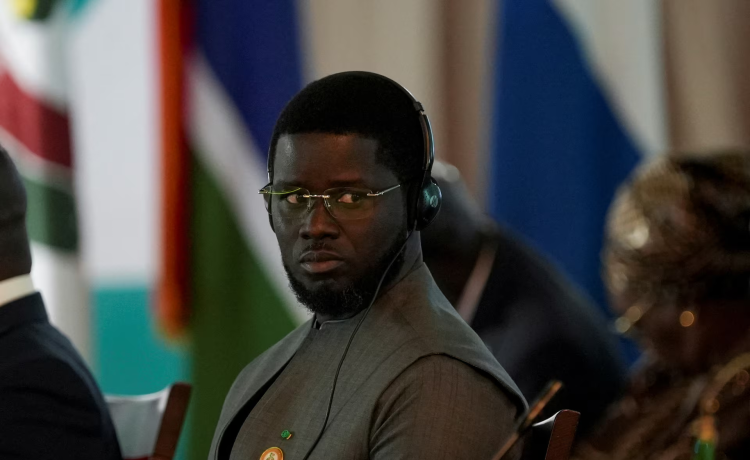
Talks have since been complicated by political tensions, including recent changes in government leadership. President Bassirou Diomaye Faye recently dismissed Prime Minister Ousmane Sonko, who had been a strong opponent of debt restructuring and previously described default as a “disgrace.”
Market analysts say the political shift has altered investor sentiment but not resolved underlying fiscal concerns.
“They have been trying to keep their lights on by rolling over debt, but now it is a question of when rather than if,” said Elina Theodorakopoulou of Manulife Investment Management, referring to a potential restructuring.
Some investors believe the removal of Sonko has reduced internal resistance to restructuring discussions, although officials appear to still favour a more gradual approach.
According to sources, Senegal is exploring whether guarantees from development finance institutions or multilateral development banks could help it secure cheaper financing without immediately resorting to restructuring.
However, analysts warn that such an approach may only delay inevitable adjustments.
“The government does still seem to be positioning itself in a muddle-through approach,” said Kathryn Exum of Gramercy. “They would like to obtain these guarantees as part of the financing envelope.”
Exum added that Senegal’s debt profile and credit rating could make such financing difficult to secure at scale.
An IMF team began a staff visit earlier in the week and is scheduled to meet the finance minister, but not the president or prime minister. Officials have indicated that the visit is exploratory and not expected to conclude with a financing agreement.
According to S&P Global Ratings, Senegal’s previously misreported debt stock is estimated at around $13bn, equivalent to roughly a quarter of the country’s $40bn economy.
While an IMF-backed programme could unlock much-needed external financing, discussions have been hindered by disagreements over growth projections, revenue assumptions and fiscal consolidation targets.
One source noted that the government has not yet made a final decision on its debt strategy, while another confirmed that no immediate agreement is expected from the ongoing IMF engagement.
Domestic political opposition to restructuring continues to weigh heavily on policy decisions, further complicating negotiations.
Senegal’s international bonds are currently trading at distressed levels between 52 and 58 cents on the dollar, reflecting investor concern over repayment risks. Prices fell further following reports that no IMF deal was imminent.
Despite market stress, Senegal recently made more than $90m in eurobond payments, with another coupon due in the coming months.
Analysts warn that while short-term financing strategies may sustain liquidity, access to concessional funding will likely depend on reaching an IMF-supported programme.
“Those sources of financing are not infinite, and a return to concessional financing linked to an IMF programme is inevitable,” said Yvette Babb of William Blair, adding that a restructuring may ultimately be required to stabilise the economy.
As negotiations continue, Senegal’s ability to balance political resistance with fiscal realities will determine whether it can avoid a full-scale debt restructuring or be forced into one by market pressures.