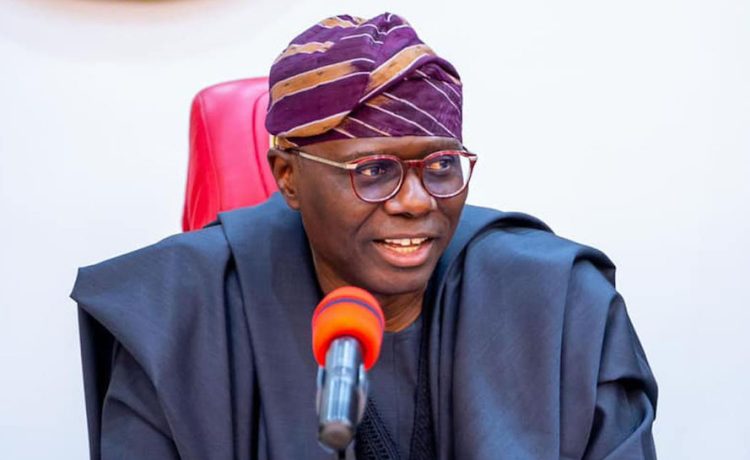
Lagos State Governor, Babajide Sanwo-Olu, has said the state is a major beneficiary of the significant growth recorded in Nigeria’s capital market over the last four years, noting that funds raised through the market are helping to finance critical infrastructure projects.
Sanwo-Olu made the remarks on Wednesday at the 30th Annual Stockbrokers’ Conference organised by the Chartered Institute of Stockbrokers (CIS) at Harbour Point, Victoria Island, Lagos.
The conference, themed “From Capital Mobilised to Prosperity Realised: Financing Nigeria’s Next Era of Growth and Global Competitiveness,” brought together capital market stakeholders to examine how funds mobilised through financial markets can translate into economic development and improved living standards.
The governor said Nigeria’s stock market had grown from approximately N32 trillion to more than N160 trillion within four years, describing the expansion as unprecedented. He also projected that market capitalisation could reach N200 trillion by the first quarter of 2027.
According to him, Lagos has benefited from the increased capacity of the capital market to provide funding for long-term development projects.
He, however, stressed that the size of the market should not be the ultimate measure of success. Rather, stakeholders must focus on developing innovative investment products, preserving market integrity and ensuring that capital raised delivers measurable economic benefits.
Bond Proceeds Support Rail and Healthcare Projects
Sanwo-Olu identified the Lagos State Government’s bond issuances as an important source of funding for infrastructure development.
He disclosed that Lagos raised N230 billion through conventional and green bonds in November 2025, describing the transaction as the highest subnational bond issuance at the time.
He also revealed that the state recently completed another bond issuance after initially targeting N200 billion but receiving subscriptions that enabled it to raise N215 billion.
The governor explained that proceeds from the bond programmes were being deployed to advance several projects under the state’s 2026 Budget of Prosperity.
One of the major projects benefiting from the funding is the extension of the Lagos Rail Mass Transit Blue Line from Okokomaiko towards Trade Fair, which is expected to add four stations to the existing route.
The expansion is part of the state’s broader efforts to improve public transportation, strengthen connectivity and support economic activities across the Lagos metropolitan area.
Sanwo-Olu also identified the 280-bed Ojo Specialist Hospital as another major project receiving funding support from the bond proceeds.
He said the facility was being developed and equipped to provide specialised healthcare services, with accommodation facilities also planned for medical personnel who will be recruited to manage the hospital.
The 180-bed New Massey Children’s Hospital is also benefiting from the funds, according to the governor.
These projects, he said, demonstrate how capital market resources can be channelled into public infrastructure and essential services that directly affect residents.
Omu Creek Bridge to Support Investment in Sangotedo
The governor further disclosed that the state was constructing the Omu Creek Bridge in Sangotedo to improve access and encourage investment in the area.
According to him, the project is expected to support economic activities around approximately 5,000 hectares of land that remain largely uncultivated.
Improved connectivity, he explained, would make the area more accessible to investors and create opportunities for development.
Sanwo-Olu said the projects reflected the importance of using capital raised through the financial market to address infrastructure gaps and unlock economic opportunities.
He added that Lagos had benefited from the growing capital market, but emphasised that other states and subnational governments should also be able to access similar financing opportunities.
According to him, making capital more accessible across the federation would support balanced development and encourage more states to invest in projects that stimulate economic growth.
Sanwo-Olu Calls for Tokenisation of Capital Market
Beyond infrastructure financing, the governor urged capital market stakeholders to embrace innovation, particularly tokenisation, to attract more young people and technology-driven entrepreneurs.
Tokenisation involves representing ownership of assets or financial interests digitally, potentially making investment opportunities easier to access and trade.
Sanwo-Olu said introducing innovative products could expand participation in the capital market, particularly among younger Nigerians who are increasingly comfortable with digital financial services.
He also pledged the Lagos State Government’s support for the N5 billion endowment fund initiated by the Chartered Institute of Stockbrokers.
The fund is intended to support training and capacity development in skills and knowledge required to advance the digitisation of the capital market.
The governor said building the necessary expertise would help strengthen the market’s technological capacity and encourage more investors to participate.
His position reflects the growing importance of technology in improving access to financial services, expanding investment opportunities and strengthening the competitiveness of Nigeria’s capital market.
CIS President Emphasises Economic Value of Capital Mobilisation
Speaking at the conference, the 14th President and Chairman of the Governing Council of the Chartered Institute of Stockbrokers, Dr Fiona Ahmed Ahimie, said the conference theme challenged stakeholders to look beyond conventional measures of capital market performance.
She explained that indicators such as market capitalisation, transaction volumes, capital raised and investment flows were important, but should not be treated as the final measure of success.
According to her, the more important question is whether the resources mobilised through the capital market are translating into tangible economic and social benefits for Nigerians.
Ahimie described a developed capital market as an essential pillar of a modern economy because it connects investors and other holders of capital with businesses and institutions that require funding for productive activities.
She noted that capital markets provide companies with opportunities to raise equity and long-term debt, while giving investors access to different investment opportunities.
She also identified risk transfer, price discovery and improved corporate governance as important functions of a well-developed market.
The CIS president stressed that the capital market plays a critical role in converting savings into investments capable of generating wealth and long-term economic value.
Using manufacturing as an example, she explained that when a company raises equity to expand its operations, the benefits can extend beyond shareholders to employees, suppliers, distributors and surrounding communities.
Her remarks reinforced the need for stronger connections between financial market activities and real economic development.
Capital Market Growth Must Translate into Prosperity
The discussions at the conference highlighted the importance of ensuring that Nigeria’s growing capital market supports productive investment rather than focusing solely on rising market valuations.
For Lagos State, bond financing has provided an avenue to mobilise long-term resources for projects in transportation, healthcare and infrastructure.
The state’s experience also illustrates how subnational governments can use the capital market to finance development priorities, provided they maintain sound financial management and investor confidence.
However, the wider impact of such investments will depend on the successful completion of projects, effective management and the ability of the infrastructure to improve economic activities and public services.
Sanwo-Olu’s call for wider access to capital market financing, alongside innovation and professional training, places emphasis on making financial resources work for more communities across Nigeria.
As the market continues to expand, stakeholders will face the challenge of ensuring that increased capital mobilisation delivers measurable improvements in infrastructure, business growth, employment and living standards.