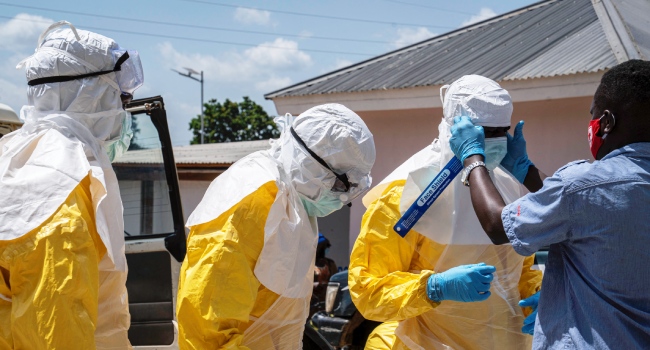
Nigeria’s response to the ongoing Ebola outbreak has entered a new phase following the medical evacuation of the country’s first confirmed patient to Switzerland. The development comes as Nigerian health authorities continue contact tracing, investigate possible exposure routes and strengthen measures aimed at preventing further transmission.
The Federal Government confirmed on October 26 that the patient, a woman who tested positive for Bundibugyo virus disease, had been evacuated from Abuja to Switzerland. The patient was reported to be clinically improved, stable, conscious and able to communicate before the transfer. Her husband travelled with her and was also taken into care and monitoring arrangements in Switzerland.
According to Nigerian authorities, the patient’s improved condition did not automatically mean that she was no longer infectious. The evacuation was therefore conducted under public health protocols designed to protect medical personnel, transport workers and other people who might have been exposed.
The Swiss authorities confirmed that the patient would receive treatment at Geneva University Hospitals, while her husband would be isolated at a hospital in Zurich. Nigerian health officials have continued working with international partners to coordinate the response and share information relevant to the investigation.
Contact tracing remains a priority
The Nigeria Centre for Disease Control and Prevention has identified 53 contacts connected to the confirmed case. Following the patient’s evacuation, 52 contacts remain under monitoring in Nigeria, while the patient’s husband is being monitored in Switzerland.
Contact tracing is a central part of controlling infectious disease outbreaks. Health officials identify people who may have had close contact with an infected person and monitor them for symptoms during the relevant observation period. This allows medical teams to detect possible additional cases quickly and take action before transmission spreads further.
The authorities have appealed to anyone contacted by public health officials to cooperate fully with monitoring arrangements and provide accurate information about movements and possible exposure.
An individual being listed as a contact does not mean that the person has contracted the virus. It means that health officials need to assess the possible exposure and monitor the person’s condition.
How the case was detected
According to information published by Nigerian authorities and international health agencies, the patient travelled from Uganda to Nigeria before developing symptoms on October 7. She sought medical care on October 11, and laboratory testing confirmed Bundibugyo virus infection on October 20.
Investigators are examining the patient’s travel history and possible exposure routes to establish how the infection occurred. Reports have linked her journey to transit through Addis Ababa and have highlighted the possibility of exposure during travel. However, the precise source of infection has not been conclusively established.
The case is part of a wider outbreak affecting several African countries, including the Democratic Republic of the Congo and Kenya. Kenya has reported nine confirmed cases, including deaths, and has been monitoring people who may have been exposed. The regional situation has prompted renewed attention to border surveillance, rapid testing and coordination between national health agencies.
The World Health Organization has advised countries to maintain preparedness and coordinated response measures. It has also advised against imposing travel or trade restrictions on affected countries solely because of the outbreak.
What Nigerians should know
The evacuation of the confirmed patient does not mean Nigeria’s response is complete. Contacts still require monitoring, alerts must be investigated, and health facilities must maintain appropriate infection prevention and control measures.
Members of the public should rely on official information from the NCDC, the Federal Ministry of Health and the World Health Organization. Anyone who believes they may have had relevant exposure should contact public health authorities rather than attempting to diagnose or treat themselves.
Nigeria’s ability to contain the incident will depend on timely reporting, accurate information, cooperation with health workers and sustained surveillance. Authorities are continuing their investigation, and the number of people being monitored may change as new information becomes available.
The immediate objective is to identify possible secondary cases early and prevent further transmission while maintaining public confidence through clear and consistent communication.
Source: Nigeria Centre for Disease Control and Prevention; Federal Ministry of Health and Social Welfare; World Health Organization; Nigeria Television Authority.