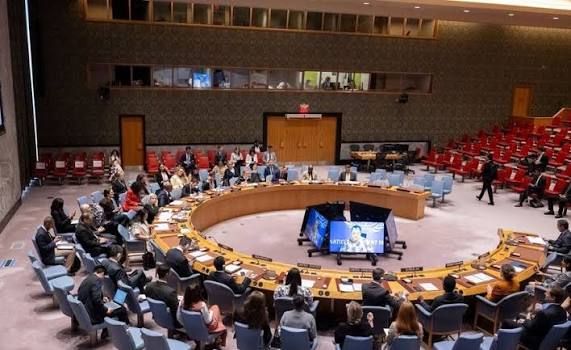
Libya has taken another step towards resolving its prolonged political stalemate after the United Nations welcomed a new agreement intended to advance the country towards elections.
The development has revived hopes that Libya could make progress towards establishing nationally recognised institutions after years of political fragmentation.
The country has struggled to organise national elections despite repeated diplomatic initiatives following the collapse of Muammar Gaddafi’s government in 2011.
Africanews reported the latest UN-backed development among its leading African stories on Thursday.
Years of Political Division
Libya’s political crisis has produced rival centres of power.
Authorities based in western Libya have competed for influence with institutions and military forces controlling much of the east.
The resulting divisions have complicated attempts to establish a single political framework capable of governing the entire country.
Elections have repeatedly been presented as a potential route out of the crisis.
However, disagreements over electoral laws, presidential eligibility, institutional powers and security arrangements have repeatedly delayed progress.
The latest agreement therefore represents an important diplomatic development, but the real test will be implementation.
Why Libya Matters to Africa
Libya’s stability has consequences extending far beyond its borders.
The country possesses Africa’s largest proven oil reserves and occupies a strategically important position connecting North Africa, the Mediterranean and the Sahel.
Political instability in Libya has also intersected with irregular migration, weapons trafficking and security problems across parts of North and West Africa.
A functioning national government could therefore have wider implications for regional security and economic activity.
Libya’s oil sector is particularly important.
Political disputes and security confrontations have periodically disrupted production and exports, adding another layer of uncertainty to international energy markets.
Elections Remain the Bigger Test
International agreements have previously generated optimism before becoming trapped in disagreements among Libya’s political factions.
That history means the latest development should not be interpreted as confirmation that elections are imminent.
Rather, it creates another framework through which Libya’s rival actors may attempt to settle outstanding disputes.
The United Nations and international partners will now face the challenge of translating political commitments into practical electoral arrangements.
For Libyans who have waited years for national elections, progress will ultimately be measured not by another agreement but by whether the country finally reaches a credible ballot capable of producing institutions accepted across its competing political centres.