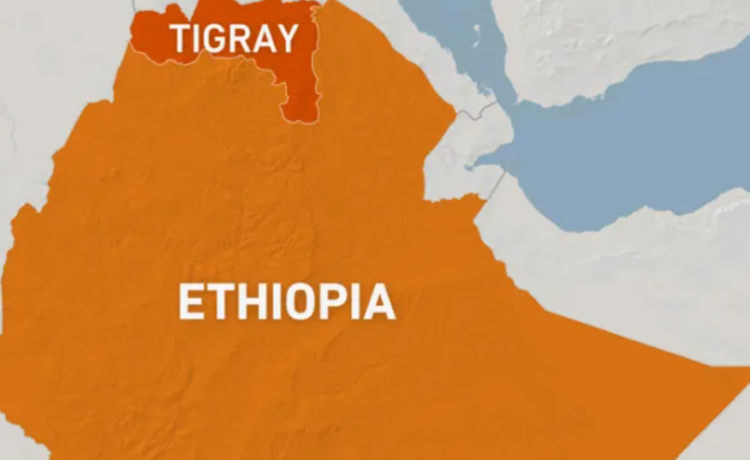
Ethiopia has announced a significant update to its economic statistics following the completion of a Gross Domestic Product (GDP) rebasing exercise that places the country’s economy at approximately $210.7 billion under its latest reported fiscal-year figures.
The announcement was made on November 4, 2026, as the government unveiled revised national accounts intended to provide a more accurate representation of the country’s economic structure and activities.
According to the Ethiopian News Agency, the updated figures form part of efforts to modernise the country’s economic measurement system and improve the quality of information used for national planning.
The country’s Finance Minister, Fitsum Assefa, explained that the revised GDP framework would strengthen economic planning, fiscal management, monetary policy and domestic revenue mobilisation.
Under the updated accounting system, Ethiopia’s GDP reached 24.03 trillion birr, equivalent to approximately $201.42 billion, using the 2017 Ethiopian fiscal year, corresponding to 2024/25, as the base year.
The figures further showed that the economy expanded to 31.86 trillion birr, equivalent to approximately $210.7 billion, in the 2018 Ethiopian fiscal year.
The revised figures provide policymakers, investors and development partners with an updated understanding of the country’s economic size and structure.
Why GDP rebasing matters
GDP rebasing is a statistical exercise through which a country updates the reference year and economic information used to calculate the value of goods and services produced within its borders.
Economic structures change over time as new industries develop, technology advances and consumer behaviour changes.
When the base year used in national accounting becomes outdated, certain economic activities may not be adequately reflected in official statistics.
For instance, the expansion of digital financial services, modern trade, manufacturing and mining can change the composition of an economy.
By updating its statistical framework, Ethiopia hopes to capture these developments more accurately.
The government said the exercise incorporated changes in digital financial services, modern commercial activities, industrial development and mining.
The revised figures are also expected to provide a better foundation for measuring productivity and identifying sectors with growth potential.
However, GDP rebasing should not automatically be interpreted as evidence that citizens have become wealthier or that the government has received additional money.
It changes the measurement of economic activity rather than creating new economic output.
This distinction is important because a larger reported GDP does not necessarily translate into higher household incomes, improved living standards or reduced poverty.
Implications for debt and government revenue
One of the major reasons governments undertake GDP rebasing is to improve the accuracy of important economic indicators.
For Ethiopia, the updated figures could influence the way its debt-to-GDP ratio, tax-to-GDP ratio and other fiscal indicators are assessed.
The Finance Minister said the revised accounting framework would help authorities evaluate debt sustainability and strengthen domestic revenue mobilisation.
A more accurate understanding of the economy could also help the government identify sectors that have the capacity to contribute more to public revenue.
The country’s ability to improve domestic revenue collection remains important as governments across Africa seek to reduce dependence on external borrowing and strengthen financial independence.
The new figures may also help international financial institutions and investors assess Ethiopia’s economic position more effectively.
However, the revised GDP figures do not automatically reduce the country’s outstanding debt or resolve existing financial challenges.
Debt sustainability still depends on factors such as repayment obligations, government revenue, foreign exchange availability, economic growth and the cost of borrowing.
Opportunities for investors
The revised economic statistics could provide investors with better information when assessing opportunities in Ethiopia.
Sectors such as manufacturing, mining, digital finance, infrastructure, agriculture and modern trade remain important areas for economic development.
Accurate economic data can help businesses identify market opportunities, evaluate risks and make investment decisions.
The government also hopes the updated framework will improve coordination between public institutions, development partners and private-sector organisations.
The exercise was reportedly completed over more than a year as part of the country’s broader statistical development programme.
Ethiopia stated that the revised national accounts follow the internationally recognised 2008 System of National Accounts framework.
The road ahead
Although the updated figures represent an important statistical development, Ethiopia will need to translate better economic information into measurable improvements in productivity, employment and living standards.
The government faces the task of ensuring that economic growth supports businesses, creates jobs and improves access to essential services.
For investors, the revised data may provide a clearer picture of the country’s market potential.
For policymakers, it offers an improved foundation for economic decisions.
Ultimately, the importance of GDP rebasing will be measured not only by the new figures but also by how effectively the government uses the information to support sustainable economic development.