The number of confirmed Ebola cases in the Democratic Republic of Congo and Uganda has risen to 263, with health authorities warning that the outbreak is spreading faster than the current response efforts.
The Director-General of the Africa Centres for Disease Control and Prevention, Jean Kaseya, disclosed this in an opinion article published on Sunday, stating that more than 1,100 suspected cases are currently under investigation across the affected countries.
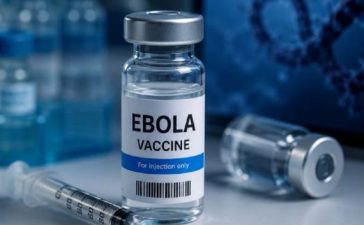
According to Kaseya, 43 people have died from the outbreak linked to the rare Bundibugyo strain of Ebola, a variant for which there is currently no approved vaccine or specific treatment.
He warned that the outbreak, now the 17th recorded Ebola outbreak in the Democratic Republic of Congo since the disease was first identified in 1976, is outpacing the global response.
Kaseya stressed the need for rapid activation of national emergency response systems and sustained investment in pandemic preparedness across Africa.
“National incident systems must be activated rapidly, and investments in pandemic preparedness must become permanent,” he stated.
The Africa CDC chief also emphasised that international support is most effective when aligned with strategies designed and led by African institutions and governments.
“International partners play an essential role, but their support matters most when it aligns with strategies that are built by African institutions and African governments,” he said.
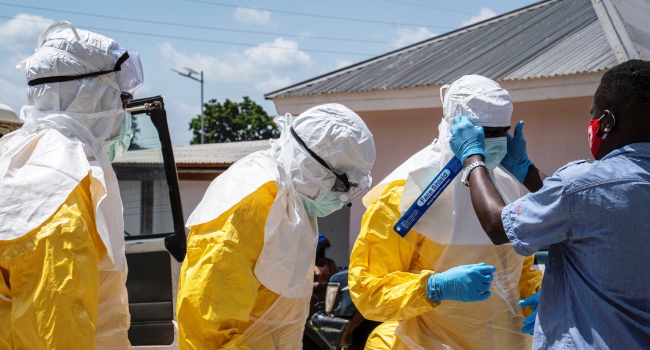
Health officials and humanitarian organisations have raised concerns over severe shortages of basic medical supplies, including protective masks and other essential equipment, after the outbreak spread undetected for several weeks. Aid workers say limited testing capacity and delayed interventions have complicated containment efforts.
The outbreak is centred in eastern Democratic Republic of Congo’s Ituri Province and has already spread across the border into Uganda, heightening concerns about regional transmission. The affected area is characterised by high population mobility, cross-border trade, insecurity, and fragile healthcare infrastructure.
In response to the escalating situation, the World Health Organization declared the Ebola outbreak in the Democratic Republic of Congo and Uganda a Public Health Emergency of International Concern in May 2026, the highest level of global health alert under international health regulations.
The WHO said the Bundibugyo strain presents a unique challenge because there is currently no licensed vaccine or approved treatment specifically targeting the virus. However, health experts note that early diagnosis and supportive medical care can significantly improve survival rates.
Despite the growing case count, there have been encouraging signs. The WHO recently reported several recoveries among infected patients, including healthcare workers, demonstrating that timely treatment can improve outcomes.
African health authorities are now calling for stronger regional coordination, increased funding, improved surveillance systems, and greater community engagement to contain the outbreak and prevent further cross-border spread.
The Africa CDC warned that without a faster and better-resourced response, the outbreak could continue expanding, placing additional strain on already fragile health systems across the region.