
The Federal Government has commenced a ₦1.45 trillion reconstruction programme covering the Apapa and Tin Can Island ports in Lagos State as part of efforts to modernise critical maritime infrastructure and improve the country’s international trade operations.
The project was officially flagged off on Wednesday, November 25, 2026, at Tin Can Island Port by the Minister of Marine and Blue Economy, Adegboyega Oyetola.
The reconstruction programme is expected to address infrastructure deficiencies at the two major ports, reduce cargo delays, improve operational efficiency and strengthen Nigeria’s ability to handle increasing volumes of international trade.
According to reports, the project is valued at approximately £746 million and is supported by a UK-backed financing arrangement.
The government has also projected that the development will create at least 20,000 direct and indirect employment opportunities during its implementation.
The commencement of the project represents an important development for Nigeria’s maritime sector, which has faced long-standing concerns over ageing infrastructure, congestion, cargo evacuation challenges and operational inefficiencies.
Why the ports need reconstruction
Apapa and Tin Can Island are among Nigeria’s most important maritime facilities.
They serve as major gateways for imported goods, industrial raw materials, machinery and other products entering the country.
They also support the movement of goods required by manufacturers, distributors, exporters and other businesses.
However, the infrastructure at the ports has struggled to keep pace with the growth of Nigeria’s population, commercial activities and international trade.
At the flag-off ceremony, Oyetola highlighted the significant increase in cargo throughput since the ports were originally developed.
He noted that when Tin Can Island Port was commissioned in 1977, Nigeria’s population was approximately 67.2 million, while cargo throughput stood at 8.11 million metric tonnes.
The country’s population and trading activities have expanded considerably since then, with cargo throughput reported to have reached approximately 129.3 million metric tonnes.
This increase has placed additional pressure on existing port infrastructure and increased the need for modern facilities capable of supporting larger volumes of cargo.
What the reconstruction project will cover
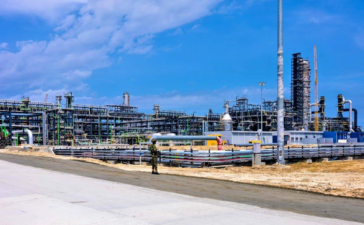
The modernisation programme is expected to cover several important areas of port infrastructure.
These include the rehabilitation of quay walls and berths, dredging works, improvements to navigation channels, access facilities, cargo-handling equipment and operational systems.
The improvements are intended to strengthen the ability of the ports to receive vessels, handle cargo and support the movement of goods more efficiently.
Modern cargo-handling equipment and improved port systems could also help reduce delays associated with loading, unloading and the movement of containers.
The project is expected to be implemented over approximately 48 months.
This means that the construction programme will require careful coordination to minimise disruption to port activities.
The Nigerian Ports Authority and relevant government agencies are expected to work with contractors to maintain cargo operations during the reconstruction period.
Employment and economic opportunities
The Federal Government has projected that the project will generate at least 20,000 direct and indirect jobs.
The employment opportunities are expected to cover construction, engineering, equipment installation, logistics, transportation and other supporting activities.
Local contractors and service providers could also benefit from the demand for construction materials, technical services and operational support.
Beyond employment, improved port infrastructure could help reduce the cost of doing business for importers and exporters.
Cargo delays often increase the expenses associated with shipping, storage, demurrage and transportation.
Businesses may also face difficulties when goods remain at ports longer than expected, particularly when the products are needed for manufacturing or distribution.
Improved port operations could therefore support businesses across several sectors of the Nigerian economy.
Addressing Nigeria’s maritime competitiveness
Nigeria faces competition from other West African countries seeking to attract shipping companies and international cargo operations.
Ports in neighbouring countries have increasingly attracted attention from businesses looking for efficient alternatives for moving goods within the region.
Modernising Apapa and Tin Can Island could help strengthen Nigeria’s position as a major maritime and commercial destination.
However, infrastructure development alone may not solve every challenge facing the country’s ports.
Efficient customs procedures, improved road networks, effective cargo evacuation systems, transparent operations and coordination among government agencies will also be necessary.
The reconstruction project will therefore need to be supported by wider reforms across the maritime logistics chain.
What comes next
The success of the programme will depend on timely execution, proper financing, effective supervision and the ability to maintain port operations during construction.
The Federal Government has described the development as part of a broader effort to modernise Nigeria’s maritime infrastructure and improve the efficiency of its trade corridors.
If completed successfully, the Apapa and Tin Can Island reconstruction could improve cargo handling, support business growth and strengthen Nigeria’s position in regional and international trade.