
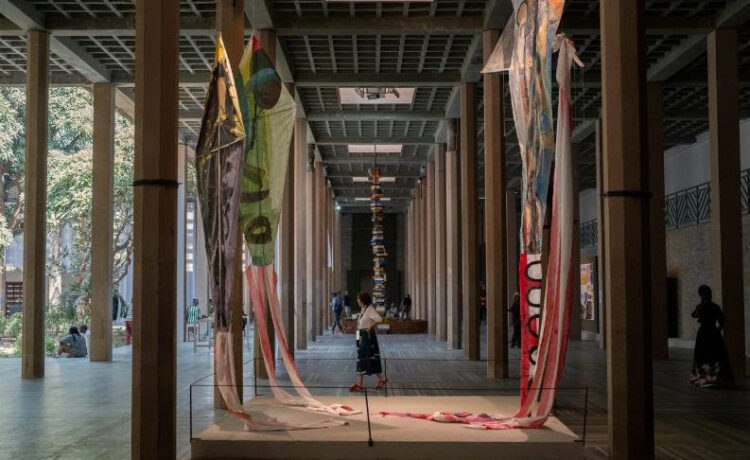
The Biennale of Contemporary African Art has opened in Dakar, Senegal, with artists and designers examining how individuals and societies can transform vulnerability into strength amid growing economic and social uncertainty.
This year’s edition, themed “(Anti)fragility,” explores the capacity of communities to emerge stronger from crises rather than merely endure difficult circumstances.
Founded in 1989, the Dakar Biennale has become one of Africa’s leading platforms for contemporary art, attracting artists, designers and cultural practitioners from across the continent and the diaspora.
The main exhibition features works by 54 artists and 22 designers, while more than 450 independent exhibitions are taking place across the city, extending the event’s reach beyond the main exhibition space.
The works address a broad range of issues, including migration, motherhood, marginalisation and the exploitation of natural resources, reflecting the social and political realities shaping contemporary African societies.
Among the featured artists is Cameroonian creative Jean-David Nkot, who reinterprets the Greek mythological figure of the Hydra through the experiences of gold miners in eastern Cameroon.
His work uses the myth as a framework for examining the realities of resource extraction and the lives of people working in mining communities.
The exhibition also broadens conventional definitions of artistic practice by featuring creations from psychiatric patients, marginalised communities and children.
Their inclusion reinforces the Biennale’s emphasis on diverse forms of expression and the importance of recognising creative voices that may otherwise remain outside established art institutions.
Through its exhibitions and wider cultural programme, the Dakar Biennale provides a platform for artists to engage with questions of identity, social inequality, resilience and collective experience.
The event also strengthens Dakar’s position as an important centre for contemporary African artistic expression, bringing together different perspectives on the challenges and possibilities shaping the continent.