
Dangote Petroleum Refinery is planning to increase the size of its initial public offering by as much as 30 per cent following overwhelming investor demand that has pushed subscriptions close to ₦6 trillion.
The development represents a major milestone for the Nigerian energy company as it moves towards broadening its ownership structure and raising additional capital through the domestic capital market.
The refinery initially planned to offer approximately 4.1 billion ordinary shares to investors as part of its public offering.
However, demand for the shares reportedly reached nearly three times the initial offer, prompting the company to consider using its overallotment option to accommodate more investors.
According to Reuters, the proposed expansion could increase the total number of shares offered to approximately 5.33 billion.
The enlarged offer could raise approximately $2.1 billion, compared with the original fundraising target of about $1.6 billion.
The development follows reports that investors submitted applications worth nearly ₦6 trillion, equivalent to approximately $4.5 billion.
The strong response highlights the interest generated by one of Africa’s largest privately developed industrial infrastructure projects.
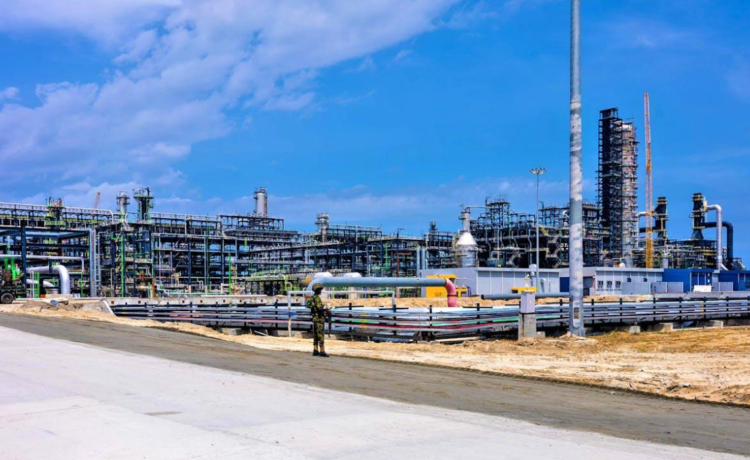
The refinery, located in the Lekki Free Zone in Lagos State, has become a major part of Nigeria’s efforts to strengthen domestic petroleum refining capacity and reduce dependence on imported refined products.
Built by the Dangote Group, the facility has an initial processing capacity of approximately 650,000 barrels of crude oil per day, making it one of the largest single-train refineries in the world.
Its proposed expansion plans have also attracted attention from investors seeking exposure to the country’s energy and industrial sectors.
Retail and institutional investors drive demand
The IPO has attracted interest from different categories of investors, including individual shareholders, pension funds and international institutional investors.
The strong subscription figures indicate that the offering has generated significant participation beyond Nigeria’s traditional large institutional investment community.
According to reports, investors from several African countries have also expressed interest in acquiring shares in the refinery.
South Africa, Botswana and Kenya were among the markets identified as important sources of foreign investor demand.
South Africa’s Public Investment Corporation was also reported to be among the institutional investors participating in the offer.
The interest from international investors demonstrates the potential of African capital markets to mobilise funds for major industrial projects.
However, demand exceeding the number of available shares means the company must determine how the final allocation will be distributed.
Reports indicate that retail investors are expected to receive the shares they applied for, while domestic pension funds could receive allocations close to their subscription requests.
International investors may experience larger reductions because of the limited number of shares available under the proposed offering.
The additional shares are expected to be distributed according to the applicable allocation arrangements, subject to regulatory approval.
SEC approval remains important
Although the company plans to increase the size of the offering, the expansion is subject to the necessary regulatory approvals from the Securities and Exchange Commission.
The regulator’s approval is important because the final number of shares issued and the allocation process must comply with applicable capital-market requirements.
The Nigerian Exchange is also expected to play an important role in the process as the company prepares to list its shares.
A successful listing would provide investors with an opportunity to trade their holdings through the Nigerian capital market.
It could also increase market activity and deepen participation in the domestic equities market.
For the Dangote Group, the IPO represents an opportunity to attract a broader range of shareholders while raising capital to support its longer-term investment plans.
Implications for Nigeria’s capital market
The level of demand generated by the offering could strengthen confidence in Nigeria’s ability to attract substantial domestic and international investment.
It also demonstrates the potential of large private-sector companies to mobilise capital locally rather than depending entirely on foreign financing.
For individual investors, the offering provides an opportunity to participate in the ownership of a major Nigerian industrial company.
Nevertheless, investment decisions should be based on the company’s financial performance, business risks, valuation and long-term prospects rather than subscription demand alone.
The refinery operates in an industry affected by crude oil prices, foreign exchange movements, competition, regulatory policies and changing global energy markets.
Its future financial performance will therefore depend on its ability to maintain operational efficiency, secure reliable crude supplies and expand its market reach.
The next important developments will include the final share allocation, regulatory clearance and commencement of trading on the Nigerian Exchange.