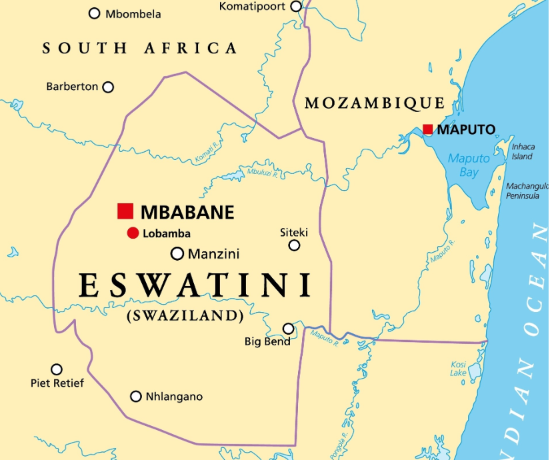
Eswatini has given foreign-owned businesses operating illegally in the country at least 12 months to leave, as the government moves to strengthen local participation in the economy.
The decision follows the approval of legislation aimed at increasing ownership and participation by emaSwati, the name used for citizens of the southern African kingdom.
The development has generated debate about foreign investment, business competition and the government’s responsibility to protect opportunities for local entrepreneurs.
According to reports, the decision came after complaints from local traders who argued that foreign-owned businesses were increasingly operating in traditional retail markets, creating pressure on smaller domestic enterprises.
Some local business owners have expressed concerns that foreign traders are competing in sectors where citizens have historically operated, making it difficult for locally owned businesses to survive.
The government has defended the policy as an attempt to expand economic opportunities for citizens and encourage greater local participation in commercial activities.
The legislation is connected to the Citizen Economic Empowerment Act, which seeks to improve the economic position of citizens and increase their participation in business ownership.
However, its implementation has generated disagreement among lawmakers, particularly over how much time foreign business owners should be given to leave or transfer their operations.
During parliamentary discussions, some lawmakers supported immediate enforcement, arguing that local entrepreneurs should not continue waiting for opportunities while foreign-owned businesses dominate certain markets.
Others called for a longer transition period, suggesting that foreign business owners should be given enough time to train local successors and ensure that commercial activities are not disrupted.
Parliament eventually agreed that affected foreign business owners should receive at least 12 months to leave.
The debate has also drawn attention to the readiness of local entrepreneurs to take over businesses currently operated by foreign nationals.
For many small business owners, access to capital, business training, supply networks and affordable commercial spaces remains a major challenge.
Removing foreign competitors does not automatically resolve these structural problems. Local entrepreneurs will still need financial support, business knowledge and access to reliable suppliers to establish sustainable operations.
The government will therefore face the challenge of ensuring that the policy creates genuine opportunities rather than simply closing businesses.
The development also raises questions about the country’s investment environment. Foreign investors often consider regulatory stability, property rights and predictable business conditions when deciding where to establish operations.
If enforcement is not clearly communicated, uncertainty could affect investor confidence and discourage some businesses from expanding into the country.
There are also concerns about the treatment of foreign nationals and the need to ensure that business regulations are applied fairly.
Reports indicate that inspections by the trade ministry began in August, with officials examining foreign-owned enterprises in different parts of the country.
Some businesses were reportedly found to be fully compliant, while others faced questions about their administrative practices and employment conditions.
Complaints raised during the inspections included issues relating to working hours, annual leave, overtime and other workplace requirements.
The government must therefore distinguish between businesses operating illegally and those that have complied with existing regulations.
Eswatini’s economy faces broader challenges, including unemployment, poverty and limited opportunities for young people. These conditions have contributed to demands for economic reforms and greater citizen participation.
The 12-month transition period could give local entrepreneurs time to prepare for new opportunities, but the effectiveness of the policy will depend on how it is implemented.
The government will need to provide clear guidelines, ensure transparent enforcement and support domestic businesses with the resources required to compete.
Ultimately, the success of the policy will be measured by whether it creates sustainable employment, strengthens local enterprises and improves the country’s business environment without unnecessarily damaging investor confidence.