The Gambia has banned protests without official permits after several nights of demonstrations over prolonged electricity shortages sparked unrest across the West African country.
The announcement was made by the country’s Inspector General of Police, Seedy Mukhtar Touray, after security forces used tear gas to disperse protesters who had gathered to complain about persistent power cuts.
Touray said no further protests would be permitted without official approval and warned that people who violated the order would face action from security forces.
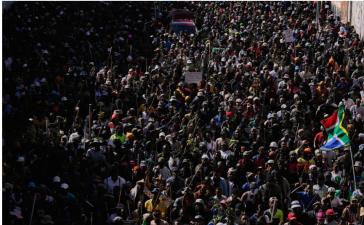
The protests were driven largely by frustration over electricity shortages during one of the hottest periods of the year. Some residents reported blackouts lasting as long as 48 hours, leaving households and businesses struggling to cope with the heat and disruption.
In the capital, Banjul, and surrounding areas, protesters burned tyres and erected barricades. Some demonstrations also took place near government officials’ residences and offices linked to the ruling National People’s Party.
The unrest escalated when a police post was vandalised and detainees were reportedly released from custody. The country’s electricity utility, the National Water and Electricity Company (NAWEC), also said three of its branches were attacked, resulting in damage to buildings, equipment and infrastructure.
Authorities have arrested 11 people in connection with the vandalism during the protests.
The electricity crisis has become a major political issue for President Adama Barrow, whose government is facing growing public frustration ahead of presidential elections expected in December.
Barrow has acknowledged the difficulties being experienced by Gambians and blamed the electricity problems partly on record demand caused by high temperatures, failures affecting major generating units and seasonal reductions in hydropower production.
The president has promised measures to improve electricity supply. The government says new generators are being brought into the country, while an additional 24-megawatt generation unit is expected to be completed by the end of October.
The government has also awarded a contract for a 50-megawatt solar power plant, which is expected to help diversify the country’s electricity supply and reduce its dependence on imported energy.
However, opposition figures have criticised the government’s handling of the energy crisis. Talib Ahmed Bensouda, the mayor of Kanifing Municipality and an opposition presidential candidate, said he understood why people were protesting, although he did not support the violence.
He argued that the frustration goes beyond electricity shortages, pointing to a lack of opportunities for young people and other economic difficulties.
The power crisis has had a direct impact on businesses and households. Businesses that depend on electricity for refrigeration, communications, manufacturing and other activities have been forced to deal with interruptions, while families have struggled with extreme heat and food spoilage.
The situation has also raised concerns about the broader economic impact of unreliable electricity. Small businesses in particular often depend on generators when public electricity fails, increasing operating costs at a time when many businesses are already facing financial pressure.
The protests come at a sensitive time for President Barrow as he prepares to seek another term in office. The growing public anger over electricity could therefore become an important issue during the election campaign.
Authorities have urged citizens to maintain peace while the government works to improve electricity supply. At the same time, the police have made clear that demonstrations must receive official approval before they can take place.
For many Gambians, however, the immediate concern remains access to reliable electricity, particularly during the country’s hot season.
The government will now face pressure to deliver on its promises to improve power generation and prevent further unrest.