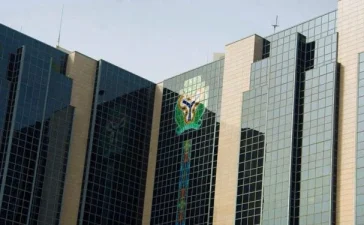
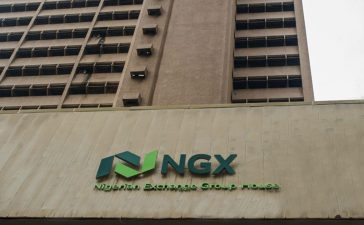
The Federal Government has moved to eliminate conflicting economic projections across its agencies as part of efforts to improve budget performance, strengthen policy coordination and accelerate economic growth.
The Economic Management Team, EMT, has approved the establishment of an inter-agency committee that will harmonise the major assumptions used by government institutions for budgeting and economic planning.
The decision was reached at an EMT meeting in Abuja, where officials also reviewed developments across the economy and considered strategies for accelerating growth in agriculture, manufacturing, trade and investment.
Under the new arrangement, projections covering crude oil prices, oil production, exchange rates, inflation and non-oil revenue will be aligned across fiscal and monetary authorities.
The government said the initiative followed a joint budget retreat and technical validation exercise that identified inconsistencies in economic assumptions used by different agencies as one of the factors affecting budget implementation.
The committee will also seek to eliminate discrepancies in the reporting of key economic indicators within government and to investors, businesses and the wider public.
GDP Growth Strengthens
The move comes as the government points to an improvement in several macroeconomic indicators.
Nigeria’s real Gross Domestic Product expanded by 4.43 per cent year-on-year in the second quarter of 2026, which the EMT described as the strongest quarterly performance since the third quarter of 2024.
External reserves have also climbed above $54 billion, while the naira has strengthened into the N1,300 range against the United States dollar at the official foreign exchange market.
Nigeria is also preparing to return to FTSE Russell’s Frontier Market classification from September 21, a development expected to improve the visibility of Nigerian equities among international investors.
The EMT said public debt remained below 40 per cent of GDP, while Moody’s had revised Nigeria’s sovereign credit outlook from stable to positive.
Despite the improvements, policymakers are seeking stronger growth in productive sectors to translate macroeconomic stabilisation into employment, investment and higher household incomes.
Agriculture Gets Fresh Attention
Agriculture will form a major part of the government’s strategy as Nigeria pursues its ambition of becoming a $1 trillion economy by 2030.
The EMT reviewed measures aimed at reducing post-harvest losses, increasing agricultural processing and mechanisation and improving the ability of Nigerian agricultural products to meet export standards.
Government capital releases are also expected to be better aligned with planting seasons to improve the effectiveness of agricultural interventions.
The team considered financing initiatives including the planned recapitalisation of the Bank of Agriculture and a new credit window targeted at smallholder farmers.
It has set a target of increasing agriculture’s share of private-sector credit to 10 per cent by 2030.
EMT to Meet Monthly
The government has also expanded the EMT’s responsibilities under revised terms of reference.
The team will now conduct regular reviews of Nigeria’s macroeconomic performance, strengthen coordination between fiscal and monetary authorities, monitor priorities under the Renewed Hope Agenda and periodically assess the Federal Government’s financing requirements.
Meetings will be held monthly, with at least two strategic sectors expected to be reviewed at each sitting.
The Federal Ministry of Finance has also been designated as the coordinating custodian for national economic data, although individual agencies will remain responsible for generating their respective datasets.
The government believes having a more consistent set of economic assumptions will improve the credibility of budgeting and reduce unexpected deviations between projections and actual economic outcomes.