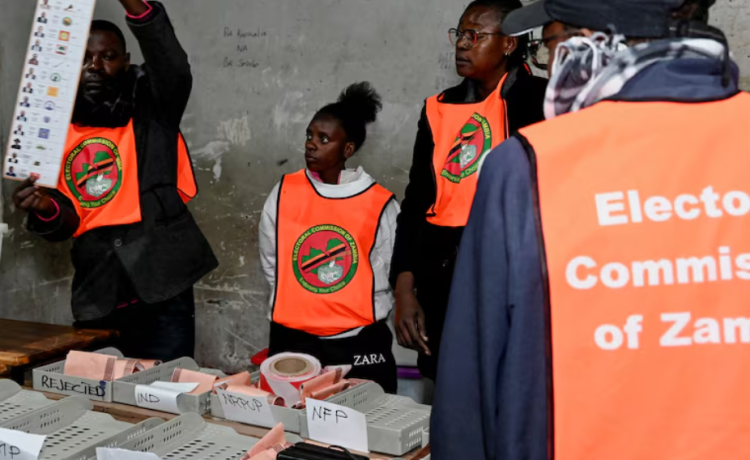
Zambia is facing growing political tension after authorities closed the country’s highest courts on the final day the opposition was expected to file a legal challenge against the result of the recent presidential election.
The closures affected key judicial institutions, including the Constitutional Court, at a critical moment for opposition leader Brian Mundubile and his political allies.
Mundubile had earlier announced plans to challenge the results of the August 13, 2026 presidential election. President Hakainde Hichilema was declared the winner and secured another term in office with about 60 per cent of the vote.
However, the opposition has questioned the credibility of the election and alleged that there were serious irregularities during the voting and counting process.
According to reports, Zambian judicial authorities advised staff not to report to work because of security concerns. Police officers were also seen around the court premises in the capital, Lusaka.
The timing of the closure immediately attracted attention because it happened on the last day available for the opposition to submit its election petition.
Under Zambia’s election laws, challenges to presidential election results must be filed within a specific legal timeframe. This meant the opposition was racing against time to ensure that its case reached the Constitutional Court before the deadline expired.
Mundubile and his supporters have insisted that they want the courts to examine allegations surrounding the election. The opposition has argued that legal action is necessary to determine whether the election was conducted fairly.
The situation has become even more tense following the arrest and questioning of several people linked to the opposition. Mundubile himself was also summoned by police over allegations involving national security.
He has rejected the allegations and described them as politically motivated.
President Hichilema and his government have denied accusations of election fraud. The president’s supporters have maintained that he won the election and that Zambia’s democratic and legal institutions should be allowed to handle any disputes according to the law.
Independent observers have also raised concerns about some aspects of the election process. However, the reports available have not changed the official declaration of Hichilema as the winner.
The closure of the courts has now created another major debate in Zambia. Human rights observers and political analysts are questioning whether the opposition will be able to fully exercise its legal right to challenge the election result.
The development is particularly significant because Zambia has often been seen as one of Southern Africa’s more stable democracies.
Many citizens and international observers will now be watching closely to see whether the opposition successfully files its petition and how the country’s legal institutions respond.
As the political situation develops, attention will remain on the Constitutional Court and whether the election dispute will move forward through the legal system.
The outcome could have a major impact on Zambia’s political climate and its reputation for democratic governance.