Sohar Port Cargo Throughput Jumps 52%
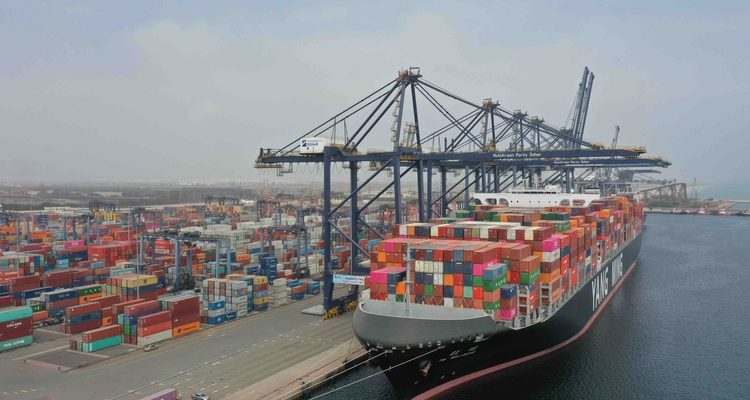
Sohar Port and Freezone has recorded a major increase in cargo throughput during the first half of 2026, reinforcing its position as an important maritime and logistics hub in the Gulf region.
Cargo throughput increased by 52 percent in the first six months of the year, according to a report published Monday.
The strong performance reflects increased activity across the port and its associated industrial and logistics ecosystem.
For Oman, the growth is significant because ports are central to the country’s strategy of expanding its role as a regional logistics and trade centre.
Port Infrastructure Supports Expansion
Modern port infrastructure is becoming increasingly important as global supply chains become more complex.
Shipping companies are looking for ports that can provide reliable cargo handling, efficient connectivity and access to surrounding markets.
Sohar benefits from its strategic location outside the Strait of Hormuz while maintaining access to major regional shipping routes.
That geographical position provides an important advantage.
Companies using Sohar can connect cargo to markets in the Middle East, Asia and other international destinations.
The freezone surrounding the port also strengthens the facility’s logistics appeal by creating opportunities for manufacturing, warehousing and distribution.
Cargo Growth Has Wider Economic Effects
Higher cargo volumes do not benefit the port alone.
Increased throughput can support employment across shipping, trucking, warehousing, freight forwarding, customs clearance and other logistics services.
It can also attract additional investment.
When companies see strong cargo activity at a port, they may be more willing to establish distribution centres or industrial operations nearby.
That can create a multiplier effect across the wider economy.
For Oman, this supports the broader objective of diversifying economic activity and reducing excessive dependence on traditional energy revenues.
Competition Among Gulf Ports
Sohar’s performance also comes as competition among Gulf and Middle Eastern ports continues to intensify.
Ports across the region are investing heavily in container terminals, industrial zones, digital systems and multimodal logistics connections.
The objective is not simply to handle ships.
Modern ports increasingly seek to control or influence the wider supply chain.
That means providing cargo owners with efficient connections from ships to trucks, warehouses, industrial facilities and final markets.
Ports that can reduce cargo dwell times and improve reliability are likely to become more attractive to international shipping companies.
Maritime Logistics Remains Critical
The 52 percent increase at Sohar demonstrates the continued importance of maritime transport to international commerce.
Even as companies explore alternative transportation routes and supply-chain strategies, ocean shipping remains the backbone of global merchandise trade.
Ports therefore remain critical infrastructure.
The challenge for operators is to convert rising cargo volumes into long-term competitiveness.
That requires continued investment in equipment, digitalisation, workforce development and landside connectivity.
It also requires effective coordination between port authorities, shipping lines, customs agencies and logistics providers.
Outlook for Sohar
If the growth recorded in the first half of 2026 continues, Sohar could strengthen its position as a major logistics platform serving the Gulf and international markets.
The immediate result is higher port activity.
The longer-term opportunity is broader economic development around the port.
For Oman, the performance provides evidence that maritime infrastructure can play a central role in building a diversified trade economy.
For international shipping companies, it reinforces the importance of Sohar as a port to watch as regional logistics networks continue to evolve.