US President Donald Trump has vowed a forceful response after Iran launched attacks targeting US bases in Jordan, reigniting tensions across the Middle East and drawing Iranian-backed groups back into the conflict.
The latest escalation came after a brief lull in fighting had raised hopes that negotiations could resume.
Those hopes were weakened on Wednesday as fresh attacks spread across the region, sending oil prices up by about five per cent amid growing concerns over disruptions to global energy supplies.
Trump issued the warning in response to Iran’s attacks.
“We’ll be hitting them hard. They’re going to get a beating,” Fox News correspondent quoted Trump as saying.
The US president reportedly added an expletive for emphasis as he vowed that Washington would respond forcefully.
Jordan’s army said it intercepted five Iranian missiles launched towards the country.
Iran’s Islamic Revolutionary Guard Corps said the missiles were aimed at US bases in Jordan.
The Revolutionary Guards warned that attacks would continue as long as threats against Iran remained.
“As long as the threats against the Islamic Republic of Iran continue… the resistance will continue,” the group said.
Iranian state television later reported that the United States had carried out a strike near Iran’s border with Iraq.
The Fars news agency, citing an official in West Azerbaijan province, said a missile struck an uninhabited area and caused no casualties.
The escalation also spread to Iraq, where the United States and Saudi Arabia carried out joint airstrikes against militant positions.
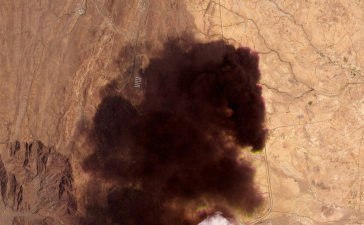
The strikes followed drone attacks targeting Saudi oil facilities, which Riyadh blamed on Iraqi armed groups aligned with Tehran.
The US military said logistics and weapons sites belonging to an Iran-aligned group were targeted.
Iraq’s Hashed al-Shaabi alliance said at least 20 of its members were killed across seven provinces, including Baghdad.
The alliance condemned the strikes as a “dangerous escalation” against what it described as an official security institution.
Two Hashed officials said five Iranian advisers were among those killed.
AFP correspondents also reported seeing coffins covered with Iranian flags.
Iraq condemned the US-Saudi operation and said it rejected all acts of aggression against its territory.
The Ministerial Council for National Security said the government would confront any violation of Iraq’s sovereignty and prevent Iraqi territory from being used to threaten neighbouring countries.
Fox News, however, reported that Trump said the strikes had been coordinated with the Iraqi government.
The strikes come amid growing pressure from Washington for Iraq to disarm pro-Iranian armed groups operating within the country.
Iraqi Prime Minister Ali al-Zaidi had earlier visited both the United States and Iran as diplomatic efforts continued.
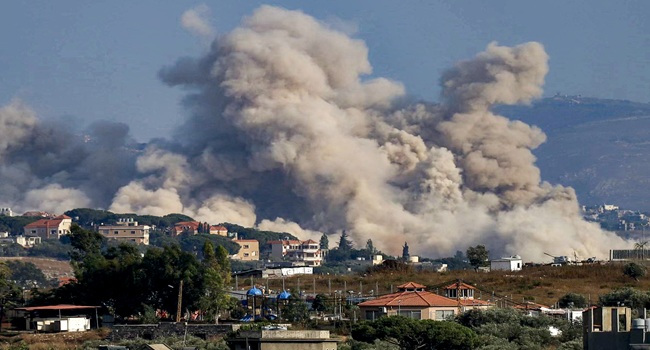
Meanwhile, tensions also increased along Israel’s northern front.
Israel accused Hezbollah of firing a drone overnight at an Israeli vehicle inside Lebanon.
The Israeli military described the incident as a “blatant violation of the ceasefire”.
Israel fought alongside the United States during the opening weeks of the war against Iran while also battling Hezbollah in Lebanon.
However, Israel has not yet joined the latest round of US strikes against Iran.
The latest escalation has also renewed concerns over the Strait of Hormuz, one of the world’s most important energy shipping routes.
The United States had said the recent pause in fighting was intended to create room for a new round of negotiations, including discussions over the strait.
Iran has maintained a blockade of the waterway for much of the conflict.
The Islamic Revolutionary Guard Corps said it had stopped three tankers in the strait and insisted that Iran had “full control” of the waterway.
Before the conflict, the strait was open to international shipping.
Tehran has insisted that it will retain control of the strategic route and has announced plans to impose fees on vessels passing through it.
Washington has rejected the move and announced new sanctions against entities linked to Iran’s Revolutionary Guards, accusing them of extorting ships using the strait.
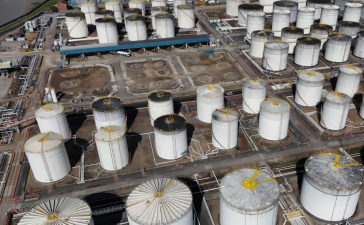
The renewed fighting has increased concerns about the security of global oil supplies.
Oil prices jumped around five per cent as markets reacted to the possibility of further disruptions to energy shipments from the region.
The Strait of Hormuz is particularly important because of the volume of oil and other energy products transported through it.
The disruption has also increased the strategic importance of the Red Sea, which provides another major maritime route for Saudi Arabian oil shipments.
With Iran, the United States and their regional allies facing renewed confrontation, fears are growing that the latest escalation could further delay diplomatic efforts to end the conflict.