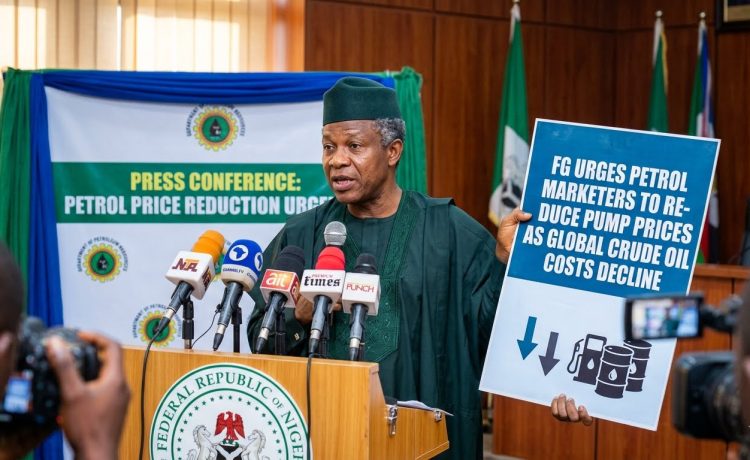
The Federal Government has called on petroleum marketers to reduce the pump prices of petrol and other petroleum products following a significant decline in international crude oil prices.
The Minister of State for Petroleum Resources (Oil), Heineken Lokpobiri, made the call during a stakeholders’ meeting with downstream petroleum operators in Abuja.
Lokpobiri said the recent fall in global crude prices must be reflected in domestic fuel pricing, stressing that consumers should benefit from lower international market costs.
According to the minister, Brent crude, which had risen to about $118 per barrel earlier in the year, has declined to below $70 per barrel, creating room for a possible reduction in petrol prices.
He questioned why retail pump prices had remained relatively unchanged despite the drop in international crude costs and urged marketers to adjust their pricing structures accordingly.
Government Seeks Fair Fuel Pricing
The minister emphasised that the deregulated petroleum market should operate in a way that balances commercial interests with consumer protection.
He explained that deregulation does not mean allowing excessive profits at the expense of Nigerians.
According to him, the objective of the policy is to allow market forces to determine prices while ensuring transparency and fairness within the downstream sector.
“Deregulation does not mean excessive profits,” the minister stated, adding that government prefers dialogue and collaboration with industry operators rather than imposing restrictive measures.
Lokpobiri said stakeholders must work together to find a sustainable approach that reduces costs for consumers while ensuring that businesses remain viable.
Stakeholders Meet Over Petrol Pricing
The meeting was convened following concerns over the gap between declining international crude prices and domestic petrol prices.
It brought together key players in Nigeria’s downstream petroleum sector, including representatives from regulatory agencies, refiners, marketers and transport operators.
Those present included officials from the Federal Competition and Consumer Protection Commission (FCCPC), Dangote Refinery, Major Energy Marketers Association of Nigeria (MEMAN), Depot and Petroleum Products Marketers Association of Nigeria (DAPPMAN), Independent Petroleum Marketers Association of Nigeria (IPMAN), National Association of Road Transport Owners (NARTO) and Petroleum Products Retail Outlets Owners Association of Nigeria (PETROAN).
The discussions focused on how price adjustments could be achieved without disrupting supply chains or creating additional challenges for businesses.
Crude Oil Prices and Domestic Fuel Costs
Nigeria’s petrol pricing remains closely linked to global crude oil trends because crude oil represents a major component of petroleum product costs.
Although Nigeria produces crude oil, domestic fuel prices are influenced by international market conditions, foreign exchange rates, logistics expenses and refining costs.
The decline in global crude prices has therefore raised expectations among consumers and businesses that petrol prices should also reduce.
Economic analysts say lower fuel prices could provide relief to households and businesses that have faced increased transportation and operating costs.
A reduction in petrol prices could also contribute to easing inflationary pressures by lowering logistics expenses across various sectors of the economy.
Dangote Refinery and Domestic Supply Outlook
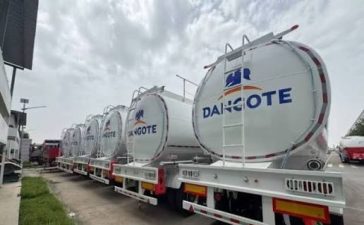
The presence of local refining capacity, particularly with the commencement of operations at the Dangote Petroleum Refinery, has changed discussions around Nigeria’s fuel supply structure.
Government officials have repeatedly stated that increased domestic refining capacity should reduce dependence on imported petroleum products and improve energy security.
Industry stakeholders believe that stronger local refining capacity, combined with favourable international crude prices, could support more competitive fuel pricing.
However, they note that other factors, including exchange rate movements, operational costs and distribution expenses, will continue to influence final pump prices.
Balancing Consumers and Industry Operators
While Nigerians continue to demand lower petrol prices, petroleum marketers have argued that pricing decisions must consider the realities of operating in a deregulated market.
Operators have highlighted costs associated with product financing, transportation, storage and exchange rate fluctuations.
The Federal Government acknowledged these concerns, with Lokpobiri stating that the aim is to reach a consensus that benefits both consumers and businesses.
The minister stressed that collaboration remains the best approach to achieving a sustainable pricing framework.
Impact on Nigerians and the Economy
A reduction in petrol prices could have widespread economic benefits.
Transportation costs, food distribution expenses and production costs are all influenced by fuel prices.
Lower petrol prices could therefore provide relief for households and improve operating conditions for businesses.
However, analysts caution that price reductions must be supported by stable supply, efficient distribution systems and transparent market practices.
They argue that long-term solutions require investment in refining capacity, energy infrastructure and effective regulation.
Outlook for the Downstream Sector
The Federal Government’s engagement with petroleum marketers signals a renewed focus on ensuring that global oil market developments benefit Nigerian consumers.
As crude prices remain lower than earlier projections, attention will now turn to how quickly downstream operators respond.
The coming weeks may determine whether Nigerians experience a reduction at filling stations and whether the sector can achieve a balance between affordable fuel prices and sustainable business operations.