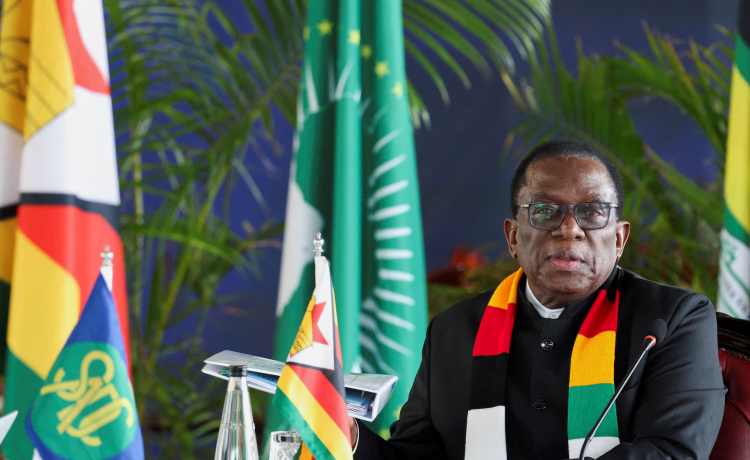
Zimbabwe’s parliament has approved legislation that could significantly extend presidential term limits, a move that may allow President Emmerson Mnangagwa to remain in power until 2030.
The proposed constitutional amendment would change presidential terms from five years to seven, effectively extending Mnangagwa’s rule by three years beyond his current mandate, which is set to expire in 2028.
Mnangagwa, 83, came to power in November 2017 following a military-assisted transition that ended Robert Mugabe’s long rule. His presidency has since been marked by competing narratives of reform and political consolidation.
Supporters within the ruling ZANU-PF party argue that the proposed extension would enhance political stability, reduce the frequency and cost of elections, and enable longer-term economic planning.
However, the move has triggered strong criticism from opposition groups, civil society actors and some liberation war veterans, who accuse the government of attempting to entrench power rather than strengthen governance.
The constitutional amendments also reportedly include proposals that would shift the election of the president from direct popular vote to selection by parliament, pending approval by the Senate before becoming law.
The debate comes amid renewed scrutiny of Zimbabwe’s democratic trajectory and governance record under Mnangagwa’s leadership.
Since taking office, he initially positioned himself as a reform-minded leader promising economic restructuring and state-owned enterprise privatisation. However, his tenure has coincided with persistent economic volatility, including one of the world’s highest inflation rates in recent years, which peaked at 243 per cent in 2023 before easing to single digits in 2026.
While the government attributes Zimbabwe’s economic challenges largely to Western sanctions, critics argue that policy inconsistencies and governance issues have played a major role in the country’s prolonged financial instability.
Political tensions have also been heightened by past state responses to protests, including a 2018 post-election crackdown in which several people were killed during clashes between security forces and demonstrators.
Mnangagwa’s political journey spans decades within Zimbabwe’s liberation movement and ruling elite. A close ally of former president Robert Mugabe, he served in multiple senior government roles, including justice, defence and intelligence portfolios.
He was long viewed as Mugabe’s likely successor until a political fallout in 2017 led to his dismissal, a move that ultimately triggered the military intervention that removed Mugabe from power.
Born in 1942 in Zvishavane, Mnangagwa was actively involved in anti-colonial activism from a young age, which led to imprisonment in the 1960s and later shaped his longstanding opposition to capital punishment, which Zimbabwe abolished in 2024.
The latest constitutional move is expected to face further debate in the Senate, where it must pass before becoming law, with analysts warning it could deepen political divisions ahead of future elections.