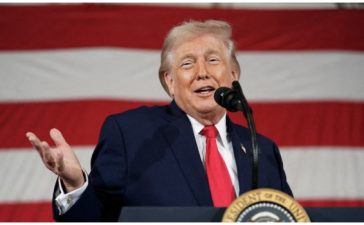
U.S. President Donald Trump said on Sunday that his administration would not rush into a deal with Iran despite growing speculation about a possible breakthrough in negotiations aimed at ending months of conflict and reopening the Strait of Hormuz.
Trump stated that the U.S. naval blockade on Iranian ships in the Strait of Hormuz would remain in force until a formal agreement is fully negotiated, certified and signed.
In a post on Truth Social, the president said both sides needed time to ensure any agreement was properly structured.
The remarks came a day after Trump announced that Washington and Tehran had “largely negotiated” a memorandum of understanding on a peace arrangement that could reopen the vital shipping route.
Before the conflict began, the Strait of Hormuz handled roughly one-fifth of global oil and liquefied natural gas shipments.
There was no immediate official response from the Iranian government.
However, Tasnim News Agency reported that the United States was still blocking parts of a potential agreement, including Iran’s demand for the release of frozen financial assets.
Negotiators remain divided over several major issues, including Iran’s nuclear programme, sanctions relief and regional security tensions involving Lebanon and the Iranian-backed Hezbollah movement.
A senior Trump administration official told reporters that no final agreement would be signed on Sunday because the Iranian political system moved slowly.
The official, who spoke anonymously, said Iran had agreed “in principle” to reopen the Strait of Hormuz in exchange for the United States lifting its naval blockade.
According to the official, Iran had also agreed in principle to dispose of its stockpile of highly enriched uranium.
The administration further claimed that Iran’s Supreme Leader, Mojtaba Khamenei, had endorsed the broad framework of the proposed deal.
Iran did not immediately confirm the claim or explain what the “in principle” understanding involved.
The U.S. official said Washington planned to first reopen the strait and remove the blockade before moving into more detailed nuclear negotiations.
He also rejected suggestions that Tehran had refused to dispose of its enriched uranium stockpile, saying the disagreement was mainly about implementation methods.
A second senior administration official disclosed that the proposed framework would give negotiators 60 days to reach a final agreement.
Iranian sources reportedly suggested that future negotiations could involve diluting enriched uranium under the supervision of the United Nations nuclear watchdog.
Iran has consistently denied accusations from the United States and Israel that it is pursuing nuclear weapons.
Tehran insists its uranium enrichment programme is intended for civilian purposes, although Western governments argue the enrichment level exceeds what is required for power generation.
Trump has repeatedly promoted the possibility of a peace agreement since the conflict involving the United States, Israel and Iran escalated on February 28.
A fragile ceasefire has remained in place since early April.
The war and tensions around the Strait of Hormuz have significantly affected global energy markets.
Oil prices dropped sharply on Monday as hopes for a possible agreement eased supply concerns.
Brent crude futures fell more than four per cent to $98.83 per barrel, dropping below $100 for the first time since early May.
U.S. West Texas Intermediate crude also declined by more than four per cent to $92.03 per barrel.
The proposed agreement has attracted criticism from both Democrats and conservative Republicans in the United States.
Former Secretary of State Mike Pompeo and several Democratic lawmakers argued that the framework resembles the 2015 Iran nuclear deal negotiated under former President Barack Obama.
Trump withdrew from that agreement during his first term in office.
Democratic Senator Chris Van Hollen described the reported deal outline as little more than a return to the pre-war status quo with Iran.
Trump, however, dismissed criticism from both political opponents and conservative critics who oppose compromise with Tehran.
Meanwhile, an Iranian military adviser to Khamenei stated that Tehran still had the legal right to manage activity within the Strait of Hormuz.
Iran’s Revolutionary Guards disclosed that 33 vessels passed through the strait over the past 24 hours after receiving Iranian approval.
The figure remains far below the estimated 140 vessels that typically crossed the route daily before the conflict.
Analysts say that even if a final peace agreement is reached, normal shipping operations through the Strait of Hormuz may not fully recover before 2027.
The conflict has already caused major humanitarian and economic damage across the Middle East.
Thousands of people were reportedly killed in Iran before the fighting paused in April.
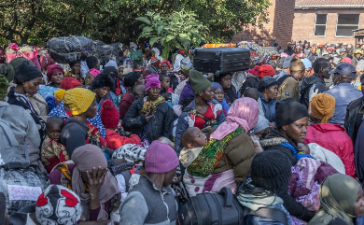
The conflict also intensified violence in Lebanon, where Israeli military operations against Hezbollah displaced hundreds of thousands of people.
Iranian strikes targeting Israel and neighbouring Gulf states also resulted in casualties and increased regional tensions.