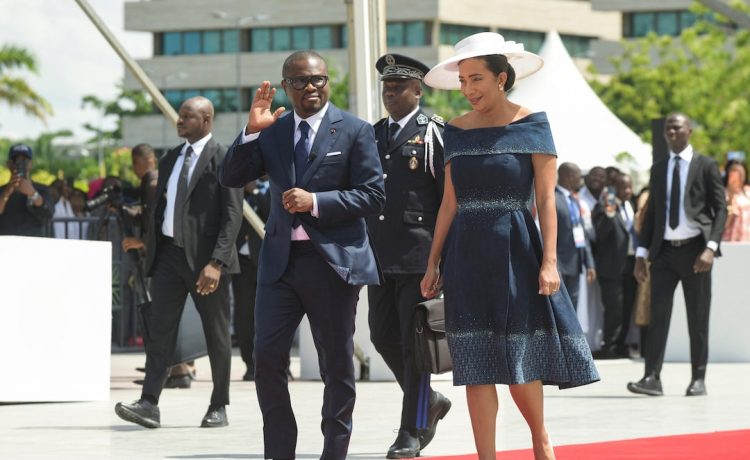
Benin’s newly inaugurated president, Romuald Wadagni, has pledged to confront growing security threats and ensure that economic growth delivers tangible benefits to citizens across the country.
Wadagni made the commitment during his inauguration ceremony on Sunday after officially assuming office as president of the West African nation.
The 49-year-old leader was elected on April 12 with more than 94 per cent of the vote against challenger Paul Hounkpe.
The election result was confirmed on Sunday by Benin’s Constitutional Court.
Wadagni succeeds Patrice Talon, who governed the country since 2016 and stepped down after completing two constitutionally permitted terms in office.
Before becoming president, Wadagni served as Benin’s finance minister for a decade and played a major role in implementing economic reforms under Talon’s administration.
The reforms contributed to steady economic growth and improved Benin’s business environment over recent years.
In his inaugural speech, Wadagni acknowledged the country’s economic progress but stressed that growth must produce visible improvements in people’s everyday lives.
He promised to prioritise job creation, access to basic services and stronger social protection programmes.
According to him, development should be experienced across every part of the country and by all segments of society.
The new president also addressed the growing security concerns facing Benin.
Northern Benin has experienced increasing attacks linked to jihadist groups spilling over from the Sahel region in recent years.
Wadagni vowed that Benin would not surrender to fear or complacency in the face of rising insecurity.
He also pledged closer cooperation with neighbouring countries confronting similar security threats.
Representatives from Niger, Burkina Faso and Mali attended the inauguration ceremony.
The three Sahel nations have remained at the centre of regional security challenges linked to extremist violence.
Wadagni further used the occasion to reaffirm his commitment to democratic principles and constitutional governance.
He stated that political power should never be treated as a personal privilege.
His remarks come at a time when several leaders across parts of West Africa have faced criticism for attempts to extend their stay in office.
Benin’s political environment has also faced recent instability.
The outgoing government narrowly survived a coup attempt in December, highlighting the fragile security and political situation confronting the new administration.
Observers expect Wadagni to continue many of the economic and governance reforms introduced under Talon while balancing growing demands for improved security and social welfare.