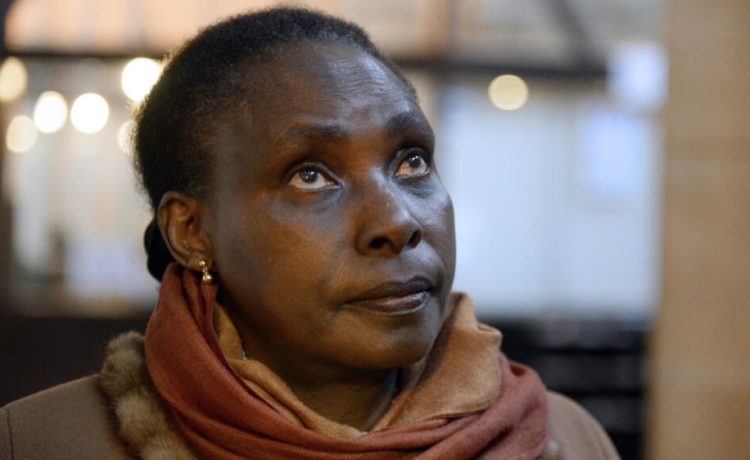
Rwanda’s former first lady Agathe Habyarimana has announced plans to appeal a recent court ruling that overturned a 2025 decision to dismiss an investigation into her alleged role in the 1994 genocide.
The case relates to the mass killings that followed the assassination of her husband, former Rwandan President Juvenal Habyarimana, which triggered one of the deadliest genocides of the 20th century.
Over a period of about 100 days in 1994, more than 800,000 Tutsis and moderate Hutus were killed across Rwanda.
Now 83, Agathe Habyarimana has been under investigation in France since 2008 for alleged complicity in the genocide. She has never been formally charged but holds the status of an “assisted witness,” a French legal category between witness and defendant.
Prosecutors allege that she was connected to the so-called “Akazu,” an inner circle of Hutu power elites, and may have played a role in coordinating killings, including drawing up lists of targeted individuals.
However, she has consistently denied all allegations, insisting she was a homemaker with no involvement in politics or decision-making during the period.
In 2025, a lower court ruled that there was insufficient evidence to continue the investigation. That decision was later overturned following an appeal by the French National Anti-Terrorist Prosecutor’s Office, leading to the reopening of the case.
Her legal team has strongly criticised the ruling, describing it as “incomprehensible” and arguing that the allegations are unsupported by credible evidence.
Her lawyer confirmed that she will now appeal to France’s Supreme Court and, if necessary, escalate the matter to the European Court of Human Rights.
The case remains one of the most closely watched legal proceedings linked to the aftermath of the 1994 Rwandan genocide, which continues to shape international justice efforts decades later.