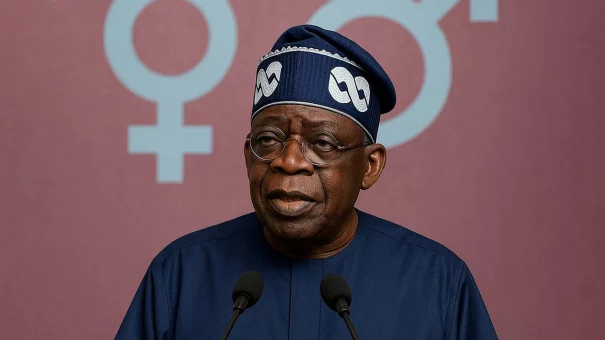
President Bola Tinubu has called for deeper economic integration across Africa, stressing the need for policies that prioritise the continent’s industrial growth and long-term prosperity.
According to a statement issued by presidential spokesperson Bayo Onanuga, Tinubu made the remarks on Tuesday while leading Nigeria’s government, diplomatic, and business delegation to the Africa Forward Summit at the Kenyatta International Convention Centre in Nairobi.
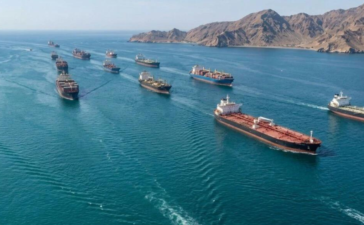
The president highlighted Nigeria’s blue economy potential as a major driver of Africa’s economic transformation, noting that the sector had remained underutilised due to insecurity and uncertainty.
“Today, I make an explicit commitment: Nigeria will intensify regional coordination by offering our Deep Blue Project’s maritime intelligence infrastructure as a shared data hub for willing Gulf of Guinea states,” Tinubu stated.
He said interoperable systems, harmonised laws, and seamless joint enforcement must become practical realities across the region.
According to Tinubu, maritime security and effective ocean governance are essential to attracting investment and unlocking economic opportunities.
“Secure sea lanes, predictable regulation, and functional courts are the preconditions that unlock private capital,” he said.
The president added that Nigeria was advancing climate-aligned port modernisation and digital transformation within the maritime sector.
“As we endorse the Nairobi Declaration, Nigeria affirms that maritime sovereignty and ocean governance are the non-negotiable foundations of Africa’s Blue Economy transformation,” he stated.
Tinubu also urged African nations to move “from sea blindness to ocean sovereignty,” describing it as a generational responsibility.
Addressing the international financial system, the Nigerian president argued that Africa could no longer remain dependent on exporting raw materials while importing finished products at high costs.
“Despite decades of independence, Africa’s share of global manufacturing value added remains below 2 per cent,” he said.
“We export raw minerals, crude oil, and agricultural commodities, and we import processed goods at a premium.”
Tinubu argued that the current global financial architecture had contributed to the de-industrialisation of African economies by limiting access to affordable capital and allowing illicit financial flows.
He said Nigeria had taken “painful, homegrown decisions” to stabilise its economy, including fuel subsidy removal, exchange rate unification, recapitalisation of the banking sector with over $3.4bn, and exiting the Financial Action Task Force grey list.
According to him, the reforms have resulted in a declining debt-to-GDP ratio projected at 32.3 per cent in 2026, stronger external reserves of $45.5bn, and improved investor confidence.
However, Tinubu maintained that even reforming economies like Nigeria still face barriers created by global financial institutions and credit systems.
The president disclosed that Nigeria is expected to spend about $11.6bn on debt servicing in 2026, representing nearly half of projected government revenue.
“Every single dollar that leaves our treasury to pay punitive interest rates is a dollar that did not go into our steel sector, our textile mills, our agro-processing plants, or our digital industries,” he said.
Tinubu questioned how African manufacturers could compete globally when borrowing costs in African countries remain significantly higher than those in Europe, Asia, or North America.
“How can we build cross-border industrial value chains under the African Continental Free Trade Area when our infrastructure projects face a financing gap deepened by the very institutions meant to bridge it?” he asked.
“The international financial architecture, as currently constituted, is an instrument of industrial disarmament for Africa.”
Tinubu insisted that Nigeria was not seeking charity but demanding a fair financial system that supports Africa’s industrialisation agenda.
“Nigeria is not asking for charity. We are demanding a financial system that intentionally enables Africa to industrialise — to process its own minerals, refine its own crude oil, manufacture its own pharmaceuticals, and compete fairly in global markets,” he said.
The president added that Nigeria would continue to borrow responsibly while insisting that African economies should be assessed based on their economic fundamentals and industrial potential rather than outdated perceptions.