Ghana has announced plans to evacuate 300 of its citizens from South Africa following renewed protests targeting foreign nationals.
Ghana’s Foreign Minister, Samuel Okudzeto Ablakwa, disclosed in a post on X on Tuesday that President John Dramani Mahama had approved the “immediate evacuation” of affected citizens.
According to Ablakwa, the Ghanaians registered at the country’s embassy in Pretoria after the foreign ministry issued an advisory in response to what he described as a “latest wave of xenophobic attacks”.
However, South African authorities have denied reports of widespread attacks on foreign nationals, insisting that several videos circulating online were fake.
Speaking on Monday, Cyril Ramaphosa said recent protests and criminal incidents directed at foreigners did not reflect official government policy.
Ramaphosa described the incidents as “isolated acts of criminality” and stressed that South Africa would continue efforts to regulate migration, secure its borders and enforce immigration laws.
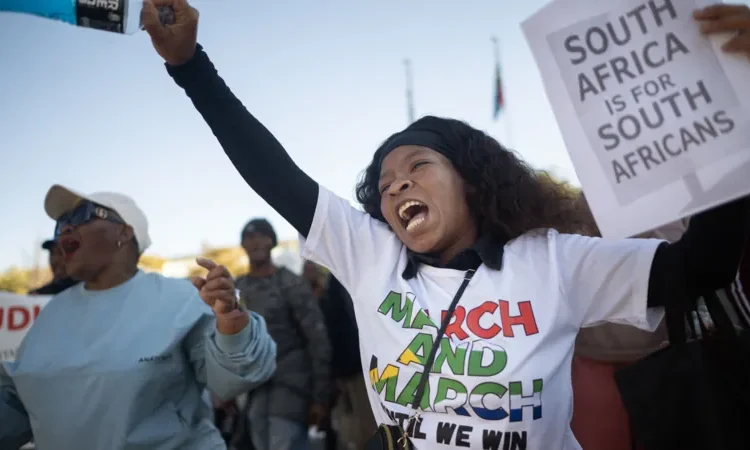
In recent days, thousands of South Africans have joined protests against illegal immigration, demanding the mass deportation of undocumented foreign nationals.
Many protesters claim illegal immigration has worsened unemployment, housing shortages and crime levels in the country.
On Tuesday, Ghana’s embassy in South Africa advised its citizens to remain highly cautious, avoid public gatherings and temporarily close shops and businesses in the port city of Durban ahead of another planned protest on Wednesday.
Nigeria and Ghana have both recently summoned South African envoys over allegations of harassment and mistreatment of their citizens.
Ghana has also written to the African Union, urging the continental body to address the issue, warning that it poses a “serious risk to the safety and wellbeing” of Africans living in South Africa.
The South African government responded by saying it had “nothing to hide” and condemned the spread of what it called fake images and videos allegedly showing attacks on foreign nationals.
Other African countries, including Kenya, Malawi, Lesotho and Zimbabwe, have also issued warnings to their citizens living in South Africa.
According to official figures, South Africa hosts more than three million foreign nationals, representing about five percent of the country’s population, although the actual figure is believed to be significantly higher.
Xenophobia has remained a longstanding issue in South Africa and has occasionally resulted in violent attacks against foreign nationals.