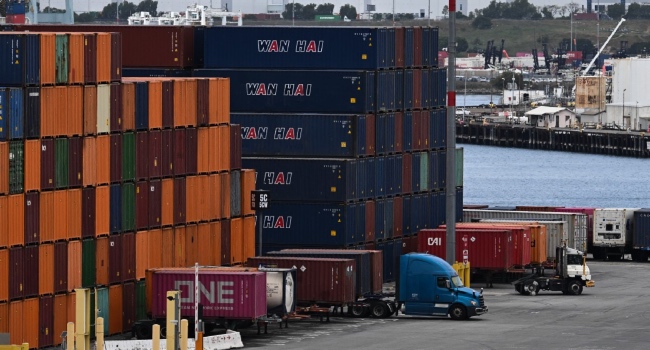
The United States recorded a slight increase in its trade deficit in March, as rising imports linked to artificial intelligence infrastructure outpaced export growth.
Data released by the US Commerce Department showed the deficit widened by 4.4 per cent to $60.3 billion, coming in slightly below market expectations.
The rise reflects growing demand for capital goods, particularly technology components tied to the global artificial intelligence boom.
According to Grace Zwemmer, imports of computers, semiconductors, and related equipment remained strong due to continued investment in AI hardware.
“Capital goods imports… remain strong thanks to ongoing demand for AI hardware,” she noted.
Imports rose 2.3 per cent during the month to $381.2 billion, driven by increases in vehicle shipments, consumer goods, and industrial supplies.
Economists say the surge in imports also signals resilient consumer demand, with households maintaining spending levels despite economic uncertainty.
James Knightley said the data aligns with earlier GDP figures, pointing to sustained investment in AI-related infrastructure through 2026.
However, exports also recorded gains, climbing 2.0 per cent to $320.9 billion, supported by a sharp increase in shipments of crude oil and petroleum products.
The jump in energy exports follows tensions in the Middle East, including the US-Israeli strikes on Iran, which disrupted global supply routes.
Oil prices have surged after Iran’s retaliation, including attempts to block the Strait of Hormuz, a critical transit route for global energy supplies.
Analysts believe the spike in oil exports could help narrow the trade gap in subsequent months if elevated prices persist.
The March figures also come after the Supreme Court of the United States struck down a broad range of tariffs introduced by President Donald Trump, prompting businesses to adjust import strategies and seek refunds.
Since returning to office, Trump has introduced a temporary 10 per cent tariff under separate authorities and is pursuing more permanent trade measures.
These shifting policies have led to volatility in trade flows, as companies rush to import goods ahead of potential duty increases.
Despite the widening gap, the deficit remained slightly below the $60.9 billion forecast by economists surveyed by Dow Jones Newswires and The Wall Street Journal.
Exports of food, beverages, and agricultural products also posted notable gains, contributing to the overall rise in outbound shipments.
Economists say the coming months will test the resilience of both consumer demand and trade performance, particularly as higher energy costs and evolving trade policies take effect.