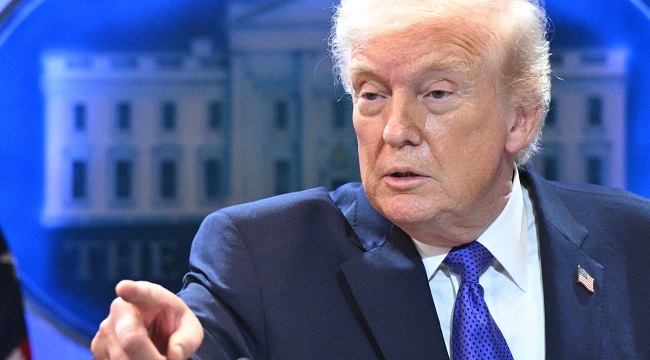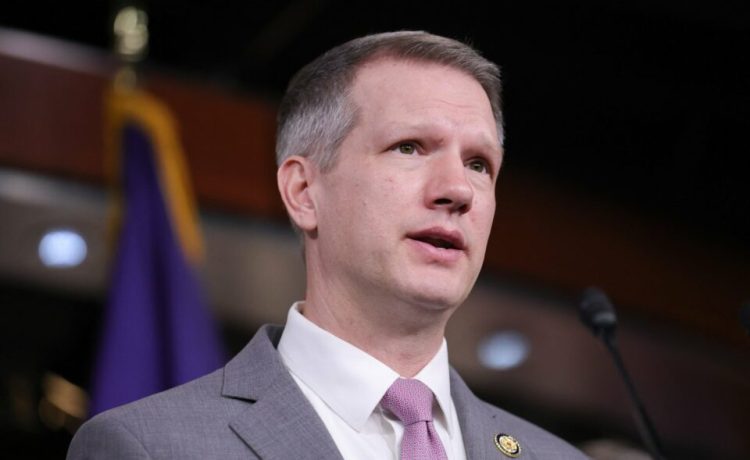
United States Congressman Riley Moore has credited US President Donald Trump with authorising the joint Nigerian-American operation that killed Abu-Bilal al-Minuki, identified as the second-in-command of the global Islamic State network.
Moore also warned that extremist groups targeting Christians in Nigeria would face severe consequences under the current US administration.
The Republican lawmaker, who serves on the US House Appropriations Committee, made the remarks during an interview on NewsNation with anchor Anna Kooiman on Sunday while discussing the military strike and the wider issue of religious persecution in north-eastern Nigeria.
In a statement shared on his X account on Monday, Moore said President Trump remained deeply committed to protecting Christian communities facing attacks from extremist groups in Nigeria.
“President Trump is laser focused on defending our Christian brothers and sisters in Nigeria against the slaughter and martyrdom they’ve faced at the hands of radical Islamic terrorists,” Moore stated.
He added that the operation against al-Minuki was intended to send a strong warning to terrorist organisations operating in the region.
“The strike on Abu-Bilal al-Minuki, ISIS Number 2 globally, sends a clear message: those who target innocent Christians will be hunted down and brought to justice. Do not test President Trump’s resolve,” he said.
According to Moore, US engagement with Nigeria on religious persecution intensified after the Trump administration designated Nigeria as a “nation of particular concern” on October 31 last year.
He disclosed that President Trump personally instructed him to investigate the situation in Nigeria.
“President Trump tasked me personally to go investigate this issue of Christian persecution, Christian genocide in Nigeria, which is what I did,” Moore said.
The congressman explained that he travelled to Nigeria alongside other members of the House Appropriations Committee and later submitted a report to the White House containing recommendations aimed at protecting vulnerable populations from extremist violence.
“We presented this report to the White House with a number of key recommendations on how we can try to protect those populations that are suffering at the hands of Islamic radical terrorists,” he stated.
Moore stressed that the issue remained a major priority for the US president and many Americans.
“This is something that the president is acutely focused on as he should be and so am I,” he said.
The lawmaker added that many Americans had expressed appreciation for increased attention on the crisis in Nigeria.
“I just a couple hours ago walked out of church to be on television here with you and I heard from many people thank you for focusing on this issue. So I think it’s something that’s near and dear to a lot of people’s hearts,” he added.
Moore also noted that US involvement in Nigeria’s counterterrorism efforts dates back more than a decade, particularly following the emergence of Boko Haram around 2015.
Nigeria’s Defence Headquarters had earlier confirmed the killing of Abu-Bilal al-Minuki during what it described as a “meticulously planned and highly coordinated” precision strike in the Lake Chad Basin.
Director of Defence Information, Maj. Gen. Samaila Uba, described al-Minuki as one of the world’s most operationally versatile terrorist commanders.
According to the military, he oversaw ISIS weapons production, drone development, global propaganda operations, and strategic coordination for ISIS affiliates outside Nigeria.
Intelligence reports also indicated that al-Minuki may have recently been elevated to Head of the ISIS General Directorate of States, regarded as the second-highest leadership position within the extremist organisation’s global structure.
The commander had been placed under US sanctions in 2023 over his links to the Islamic State.
Before pledging allegiance to ISIS in 2015, al-Minuki was a senior commander within Boko Haram and was reportedly linked to the 2018 Dapchi kidnapping involving more than 100 schoolgirls.