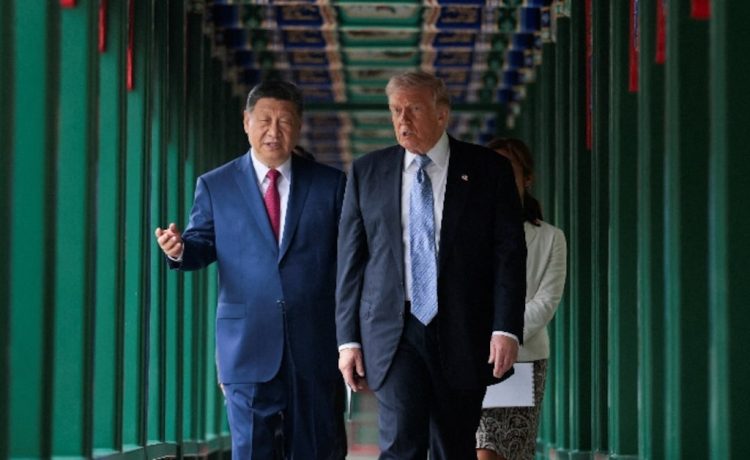
Donald Trump left China on Friday without major breakthroughs on trade or meaningful progress toward ending the Iran war, despite two days of diplomatic engagement with Chinese President Xi Jinping.
The visit marked the first by a U.S. president to China since 2017 and was widely seen as an attempt to secure diplomatic and economic wins ahead of upcoming U.S. midterm elections.
However, the summit ended with limited concrete outcomes, despite extensive ceremonial displays including military honours, formal banquets, and high-level meetings in Beijing.
Behind closed doors, Xi Jinping reportedly issued a warning on Taiwan, stating that any mismanagement of the issue could risk escalation into conflict.
During remarks to reporters en route back to the United States, Trump said Xi expressed opposition to Taiwan independence but noted that he made no commitments during the discussion.
“I heard him out. I didn’t make a comment… I made no commitment either way,” Trump said, adding that he would consult relevant stakeholders before deciding on a pending arms sale to Taiwan.
The meetings featured formal hospitality, including a lunch of lobster balls and Kung Pao chicken at the Zhongnanhai leadership compound, as both sides publicly emphasized cordial relations.
However, despite expectations of economic deals, including potential aircraft sales involving Boeing, no major agreements were announced.
Chinese President Xi used the summit to promote a new framing of bilateral relations described as “constructive strategic stability,” signalling a shift away from the “strategic competition” language used by previous U.S. administrations.
Analysts noted that the proposal reflects Beijing’s desire for a longer-term stabilisation of relations, even as key disagreements remain unresolved.
According to Da Wei of Tsinghua University’s Center for International Security and Strategy, the new framing represents a notable diplomatic development, though its acceptance by Washington remains uncertain.
Despite the cordial tone of the visit, the outcome underscores continuing tensions between the world’s two largest economies over trade, security, and Taiwan.