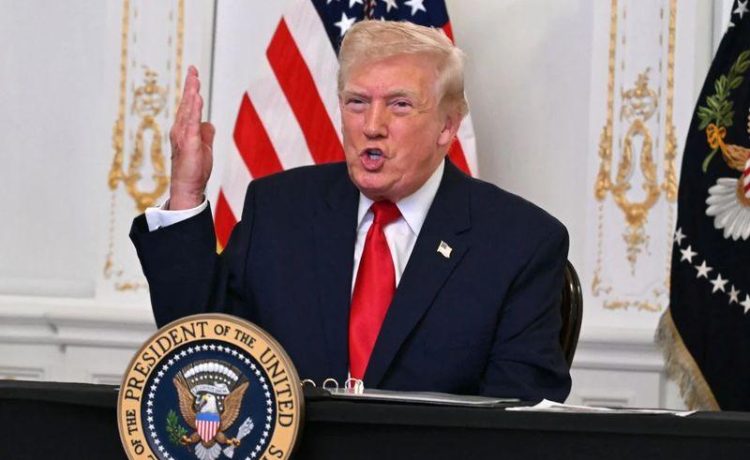
U.S. President Donald Trump has ignited fresh controversy after appearing to support a proposal to rename the Strait of Hormuz as the “Strait of Trump.”
The idea gained traction after Trump reshared a post on his Truth Social platform on Wednesday. The post featured a map labeling the narrow but strategically vital waterway under the new name, drawing swift global attention.
The Strait of Hormuz connects the Persian Gulf to the Gulf of Oman and remains one of the world’s most critical routes for oil transportation. A significant share of global crude shipments passes through the corridor daily, making it central to energy security and international trade.
Although the gesture appears symbolic, it comes amid heightened tensions between the United States and Iran. The waterway has long been a flashpoint in relations between both countries, often at the center of disputes involving sanctions, maritime security, and freedom of navigation.
Trump’s reshared post also echoes earlier remarks in which he hinted at renaming the waterway—an idea widely viewed by analysts as provocative rather than a formal policy move. Experts note that international waterways such as the Strait of Hormuz are governed by global conventions, making any unilateral renaming effectively impossible.
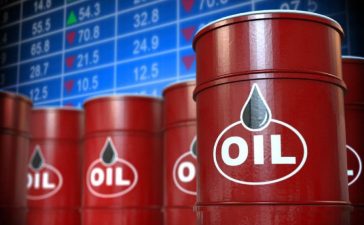
Still, the timing of the message has added to market uncertainty. Oil prices climbed as concerns grew over potential supply disruptions tied to the ongoing tensions. Brent crude rose to its highest level in years amid fears that instability in the region could impact the steady flow of oil.
According to a report by The Economic Times, prices surged on Thursday as worries mounted over a prolonged U.S. blockade on Iranian exports and stalled nuclear negotiations. The report also noted that Brent crude reached its highest level since mid-2022.
The surge followed a report by Axios indicating that Trump rejected Iran’s proposal to reopen the waterway, suggesting that restrictions could remain in place until a broader nuclear agreement is achieved.
Analysts warn that continued uncertainty surrounding the Strait of Hormuz could further strain global energy markets, with ripple effects on economies already grappling with inflation and supply chain pressures.